Archive
Resistance Strategy
– Adapted from The Practical Guide to Building a Better World, Bread and Roses Press, Spring 2025
With the election of Donald Trump and Democrats shut out of policy making nationally we see a shift in organizing activities. Once again people are focusing on “resistance” types of activities. As we consider the principal goals of protest activity, one of the most significant but least likely to be achieved is policy change.
Protesters want to stop projects, change laws, end war, fund programs, and save the world. There are many reasons why policy change is elusive. Obviously, the deck is stacked for the interests of those who have concentrated power. Money, resources, and entrenched power structures favor and support the status quo. There are also important factors regarding how activists play the hands they are dealt. Focusing on those areas is more fruitful as things that are under our control comprise our entire arena of action.
One of the great strategic community organizers was Saul Alinsky. He wrote the dated but still relevant Rules for Radicals and promoted activist training via The Midwest Academy and other community organizations. Before he was a bugaboo of the right and I was a field organizer for the Student Environmental Action Coalition, one of the critical tools we used was the Midwest Academy’s Strategy Chart. The strategy chart is a simple tool primarily designed to address a common activist problem: jumping to tactics without identifying a strategy that can result in policy change.
It’s a common error to see a problem and jump to tactics without really exploring what you would need to do to have a better chance of a positive outcome. Strategy charts are usually created in a group setting. It’s important not just to have a good plan but to involve as many stakeholders as you can in the planning. People are much more invested in activities in which they have a voice.
The first step is to identify what you want to accomplish. One of the reasons we may not have seen policy change commensurate with the level of protest activity during the most recent racial justice protests could be the lack of clear policy objectives. Movement leadership was dispersed and localized and, even within individual communities, there was a lack of a consensus on what we were trying to accomplish.
As the Roman philosopher Seneca said, “If you don’t know to where you are sailing, no wind is favorable.”
You can make long-term, intermediate and short-term goals if you are working from an existing organization, or immediate goals might be self-evident if you are rallying around a particular issue or objective.
When you are movement building, organizational considerations need to be taken into account. What kind and how many resources do you have to mobilize? What activities can move forward your agenda and build your organization? How does your organization/movement need to grow to achieve your mission? What skills, reputation, and collaborative partners can our actions enhance?
Being thoughtful to ensure actions build up, rather than deplete, your group/community is smart organizing. The two ways to ensure your activism will continue into the future are building strong and lasting organizations and building robust and resilient communities of change.
You must be specific in a strategy chart. How much money do we want to raise? How many new participants or how many new leaders will there be? Lastly, you want to identify any internal issues that will need to be addressed to take on the issue you have identified.
The next step is identifying potential allies and stakeholders who you can activate to work with you. Who shares similar values? Who has worked on this issue in the past? Who is impacted by the issue you are trying to address? The more diverse the stakeholders you can identify, the bigger your potential change movement becomes.
After identifying what you want to accomplish, you determine who has the power to make that change. If you want to shut down a nuclear power plant that is an asset of an investor-owned utility, you might look at the Board of Directors or the Nuclear Regulatory Commission. On a smaller scale, if you wanted speed bumps on your busy road, your local Mayor and City Council or the City Manager might be able to give you what you want. It might take a little research or fact finding to get this step right.
Once you know who your target is, you identify what leverage you have over your target. In general, businesses and corporations respond to money and elected officials respond to votes. In our antinuclear power work, our movement sought to impact the Board of Directors through shareholder amendments and protest activity that drove up security costs and soured public perception of the company.
We did a “fold, mutilate, spindle” campaign when customers paid their bills. By taping pennies to their electric bill or stapling the check we forced hand processing of bill paying instead of the automatic bill processing that is the most cost effective. This tactic served to drive up costs, as boycotting a utility is nearly impossible for most of us.
We largely sought to impact the Nuclear Regulatory Commission through public comment via public engagement and feedback processes. The first demand of protest groups is to get a meeting with leadership to facilitate negotiations and lend credibility to your organization. However, even with our dynamic tactics and public support, we were unable to get over that hurdle.
On a much smaller scale—the quest for speed bumps for example—you may learn that speed bumps are decided on by the Public Works Department and approved by the City Manager. Having no direct influence over the City Manager or Public Works, your campaign might focus on your City Council Members or the Mayor, who hires and fires the City Manager. Such indirect targeting is common, as many decisions are made by appointed, rather than elected, officials. After you know your target, you can assess whether you want to address them directly or focus on someone who has power and influence over that person.
Now we are ready to go to tactics. Continuing with the speed bump example, if you did some research, you might find an already established process in place. In Columbia, Missouri this process involves collecting petition signatures to show neighborhood support. After that, the city measures traffic counts and driver speed, and with that info and crash statistics, it generates a score. Then, the top three or so projects get built each year.
If your project was lower on the list but had a good case to make, you could organize protests and rallies targeting City Council Members or Candidates, especially if there is an upcoming election. You could write letters to the editor, show up at Council meetings for public comment, make social media posts, and get signs made. There is an art to being the squeakiest wheel, which tends to get more than its fair share of the oil. Focused strategic squeaking is even more likely to be successful.
Another reason policy change can be elusive for activists is that they’re coming to the issue too late. Frequently, people who oppose an issue don’t learn about the issue until the major decision points have passed. Trying to bring about change at the 11th hour is much harder than getting in early and engaging in public input processes. Also, activists sometimes bite off issues in which a policy win would require more participants than they can mobilize.
With good strategy your resistance activities can be more than a feel-good experience of speaking truth to power. Instead you can engage in resistance activities with movement and organizational building in mind to build relationships and accumulate power and influence to make effective policy change a reality.
Rolling with Resistance
To be in opposition to authoritarianism is right and proper and good. Trump pardoning the January 6th insurrectionists raises the chance of street violence by both sending a message and releasing violent empowered organizers back to the street.
We are moving into dangerous times. I see the punching Nazi memes spread widely. I see the don’t just say you see Proud Boys but say how many, engaged in what tactics, armed how, and exactly where.
This preparation for street fighting seems reminiscent of the German socialists street fighting the fascist youth. It played into Hitler’s hands to see more power. Street violence plays into the hands of the authoritarians.
I would call for other tactics than street violence. In a counseling technique called motivational interviewing it talks about rolling with resistance. We don’t engage directly with the unhelpful bullshit but allow it to pass by.
Undermine the authority of the dominant paradigm through the simple act of telling the truth and not buying into the gaslighting. Humor and mockery and pointing out the absurdity of their actions. Being reasonable and unperturbed and not taking their bait is in order.
We need to remember our audience. Those folks who don’t follow the news, have little factual information and have real issues that were not addressed by the Bidenomics of rising prices, housing costs, and lack of opportunity.
Trump is at his highest approval underwater at a little less than 2% negative. If he can be brought down to 10% negative the Supreme Court and Senate may set some limits to this lame duck would be authoritarian.
Or we can engage him in rhetorical battles of his choosing where our complex truths are less compelling than his simple lies and we lose the middle. His hurting his voters by ending $35 insulin is lost in the culture wars and his executive orders trump the constitution because no one who can will hold him accountable.
The choice is ours. To be strategic and disciplined, true and right and shape what comes next for justice or be reactive and right and lose it all but the boot smashing in our face for all eternity. Or something entirely different, I don’t know, I just need to do my best to build something good.
Last days of democracy?
What makes a good leader?
A good leader promotes democracy. Democracy is our commitment to each other that we respect each other and we respect fairness.
The pro-Democracy Alliance Pledge
We, the undersigned, pledge our unwavering commitment to the principles of democracy, justice, and equality. In an era of profound challenges to the foundations of our republic, we affirm that:
1. Democracy is Worth Defending
We stand resolute in protecting free and fair elections and political activism in all its forms, ensuring every American can participate in their democracy without obstruction or fear of reprisal.
2. Truth and Accountability Matter
We commit to fostering transparency, combating misinformation, and holding leaders accountable to the people they serve.
3. Unity is Our Strength
We reject divisive politics of cynicism and seek to build bridges across communities, celebrating diversity as a cornerstone of our democracy.
4. Justice and Equality are Essential
We champion policies and actions that promote fairness, safeguard rights, and empower all citizens to have a voice in the political discourse.
5. Action is Required
We will not remain idle in the face of threats to democracy. We commit our resources, energy, and voices to advancing democratic ideals and combating anti-democratic forces.
By joining the pro-Democracy Alliance, we vow to work towards our common goal to uphold these values, protect our shared future, and leave a stronger democracy for generations to come.
If not us, then who? If not now, then when?
The pro-Democracy Alliance won’t form itself. Being born into a democracy won’t ensure you get to stay one. Democracy is under threat and dies in the darkness. All of us need to take action, speak out, and participate.
Towards the end of another busy day my fiance said, “boy it’s been a season, hasn’t it?” That led to some reflection on all that we’ve done: Moving, holiday travel, recovery from surgery and other medical stuff, her busy season at work, shepherding my book through the publishing process, and launching the New American Community’s County Outreach Project.
If you’re a regular reader you know I’ve sworn off jamming all the time to the puttering my way to happy destiny phase of life. Nonetheless, I have started early and jammed all day pretty much all winter. Managing the blizzard and follow up cold snap has complicated the final part of the move and clean out of the old apartment.
Yesterday we strapped a couch and dresser to the rack of the Toyota Yaris to haul them to the dump. Large item collection was suspended. I wish I would have taken a picture, we got more than a few points and laughs as we drove across town. You gotta do what you gotta do.
I also forgot to mention we got the 18 yo off to the dorms. Seeing this young man take a big step towards independence has been a thrill but also a series of one more thing we have to do.
Through it all though we’ve kept our good humor. I was grimly focused on packing and the day of the move but after that period of hard work and focus I dialed it back a bit. My dad hauled furniture and doing that work brings him up in me. I appreciate the technical expertise but the curt authoritative communication style creates problems as useful as it is.
Spraining my foot did slow things down and probably was overall a good thing. It’s also fun and meaningful to be organizing again. Getting my office and desk stop set up was a great feeling as I have been working out of a messenger bag for a year and a half.

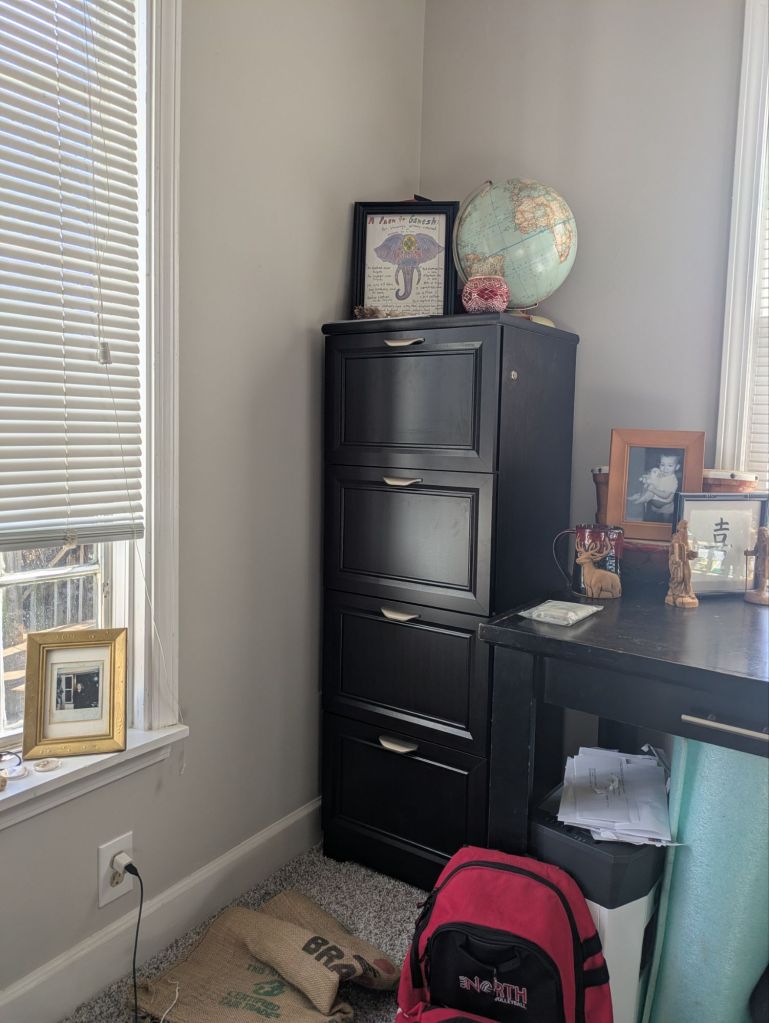
To launch our County Party Outreach Project we created a database of all the County Democratic Party organizations. We sent out a survey and I have been following up with state party leadership.
We have been well received and the survey is getting a good response. Early results show Messaging is the biggest need area. We are starting on a technical assistance manual on the topic. It validates the book as messaging is a consistent theme in a lot of chapters. Now it’s off to clean the old apartment and hopefully get it done today and have that behind us.
The Language of Trees
Last night I missed a stair, rolled my foot, and ended up with a solid sprain. I hit it with RICE which has given me some unexpected time for reading.
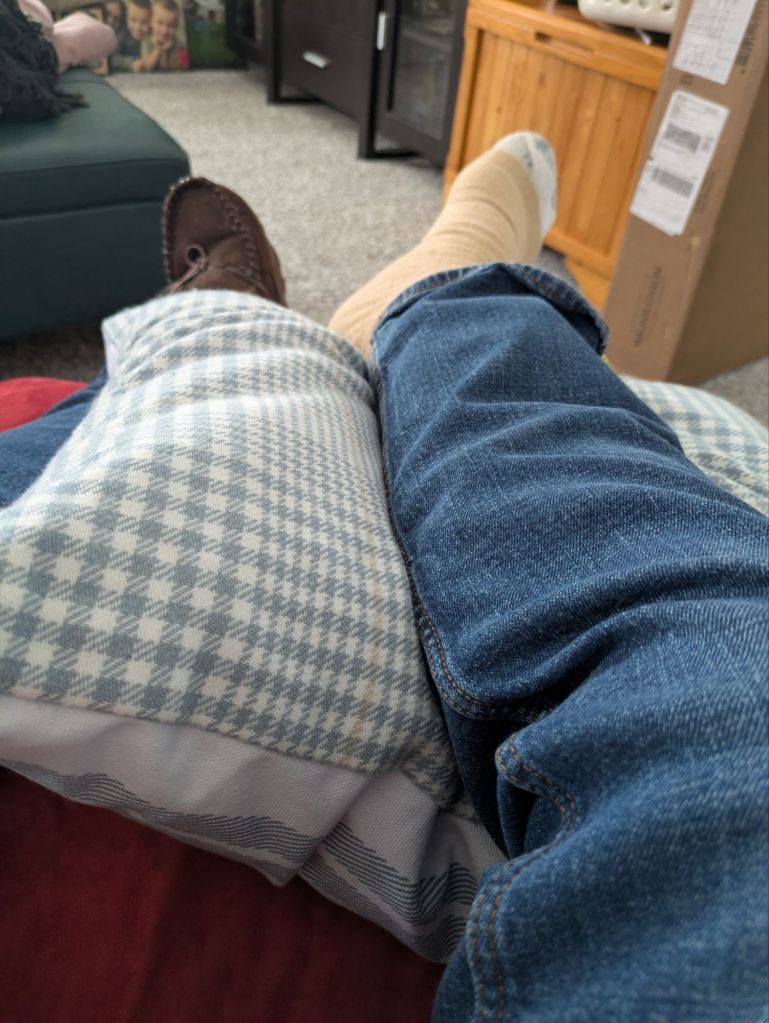
I had picked up Steve Wiegenstein’s novel The Language of Trees. It’s the third of four (so far) in his historical fiction account of a utopian community in the Missouri Ozarks. I’ve been savoring the series with a little pause between each one.
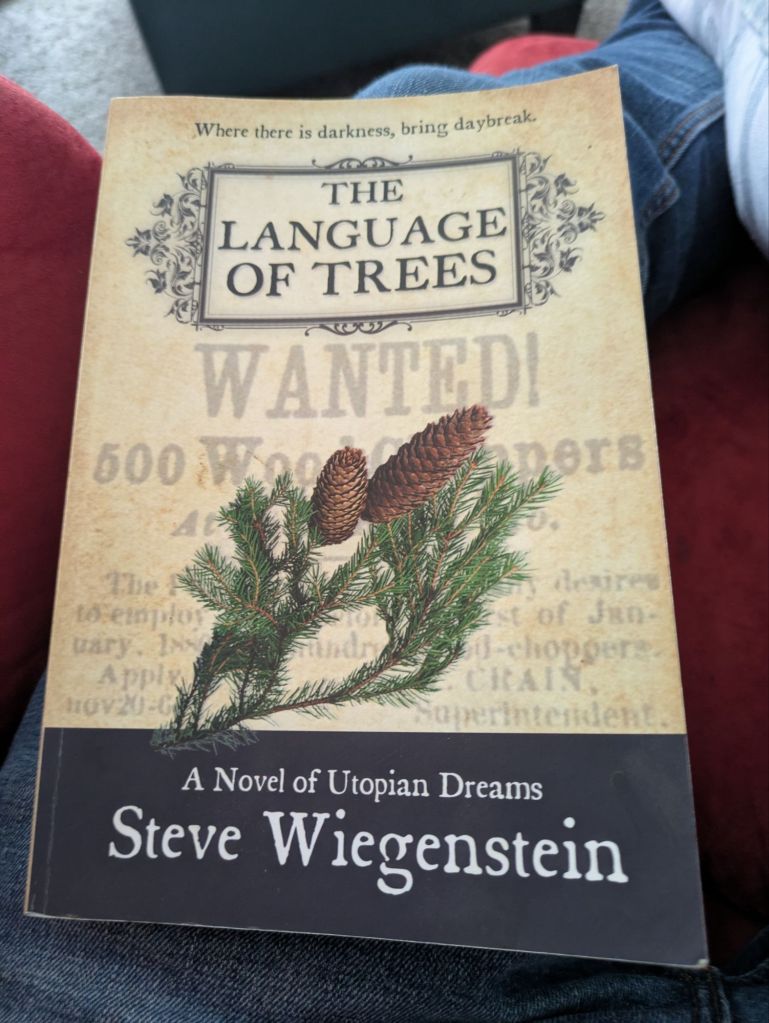
It hits all the right notes. I am a long student of American utopian communities in general and Missouri ones in particular. I had read the founder of the Oneida Colony John Humphrey Noyes’s excellent history of American utopian communities when I was a first semester freshman and it made a big impact on me. https://en.wikipedia.org/wiki/John_Humphrey_Noyes
Steve Wiegenstein is also a fan. When the Columbia Men’s Book Club read his book of short stories he came to the meeting to talk about his book and he ended up joining our esteemed body. Being with friends with Steve makes reading his stuff a treat but the books stand on their own.
I love the Missouri history and geography and this book covers the very short and very brutal time when the old growth stands were cleared in 20 years. As devastating as the Civil War in many ways, I’m looking forward to learning something as well as exploring an important and sad time in history.
What I like most about reading Steve is his keen insight into the human condition. His characters are flawed and real and he captures the awkward struggle of navigating through life with the dialectics of our dreams and commitments and societal expectations and the yearnings of our hearts as well as anyone putting pen to paper.
You should catch the first book of the series for sure. https://www.stevewiegenstein.com/
Last night I missed a stair, rolled my foot, and ended up with a solid sprain. I hit it with RICE which has given me some unexpected time for reading.
I had picked up Steve Wiegenstein’s novel The Language of Trees. It’s the third of four (so far) in his historical fiction account of a utopian community in the Missouri Ozarks. I’ve been savoring the series with a little pause between each one.
It hits all the right notes. I am a long student of American utopian communities in general and Missouri ones in particular. I had read the founder of the Oneida Colony John Humphrey Noyes’s excellent history of American utopian communities when I was a first semester freshman and it made a big impact on me. https://en.wikipedia.org/wiki/John_Humphrey_Noyes
Steve Wiegenstein is also a fan. When the Columbia Men’s Book Club read his book of short stories he came to the meeting to talk about his book and he ended up joining our esteemed body. Being with friends with Steve makes reading his stuff a treat but the books stand on their own.
I love the Missouri history and geography and this book covers the very short and very brutal time when the old growth stands were cleared in 20 years. As devastating as the Civil War in many ways, I’m looking forward to learning something as well as exploring an important and sad time in history.
What I like most about reading Steve is his keen insight into the human condition. His characters are flawed and real and he captures the awkward struggle of navigating through life with the dialectics of our dreams and commitments and societal expectations and the yearnings of our hearts as well as anyone putting pen to paper.
You should catch the first book of the series for sure. https://www.stevewiegenstein.com/
The Secret of Overwhelm
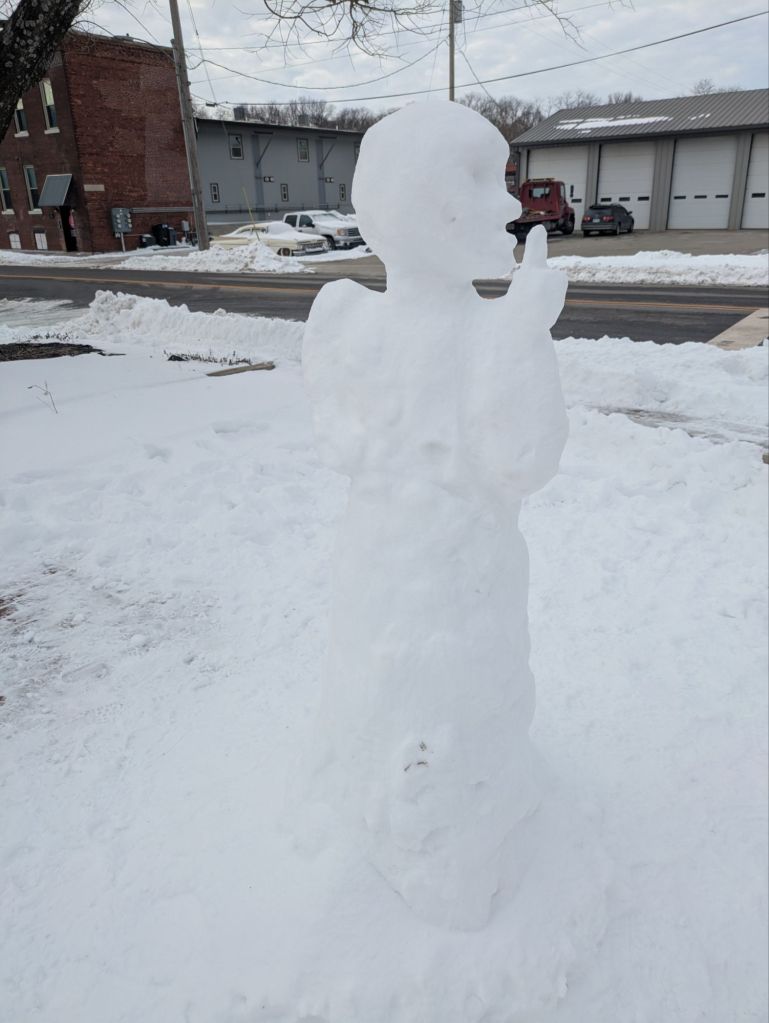
There are a couple of secrets to dealing with feeling overwhelmed. Our fast paced modern life often feels like far more is expected of us than we can actually deliver. Overwhelm can result in frenetic activity that doesn’t bring results, like spinning your wheels, shutting down and not doing anything, or perhaps worse yet getting the “fuck it’s”, where we start doing behaviors we ordinarily would never do.
Learning to handle overwhelm with grace has been a skill I have been forced to develop. I remember when I was leading a multidisciplinary team working with hard to serve individuals in a behavioral health program and my Manager said: “You look like you feel overwhelmed”.
I said: “I don’t feel overwhelmed, I am overwhelmed.” The issue was not my emotional regulation it was the material factors of the job I was assigned to do.
My first tip is differentiate, is this a feeling or is it a situation that truly exists? If it’s a feeling we use our reliable feelings management skills of taking a moment to slow and deepen our breath. Note any tense areas, I carry my stress in my neck and shoulders, so stretching and relaxing those areas are a must for me.
Note your thinking. Question and challenge any thinking that is contributing to the feeling. Can we look at something differently to get a different result? In addition to challenging negative self talk launch some positive self talk to encourage and soothe yourself. If those helpful and comforting thoughts don’t immediately come to mind, think about what you would say to a friend.
If it’s an actual situation of being overwhelmed then prioritizing and strategically addressing the confounding issues is the key. I rank what I have to do and mostly tackle the most important things first. When you’re taking action you focus on that task with your whole attention and let the rest go until it’s their turn.
We can only do one, or sometimes two things at a time. Don’t try to tackle more than that. Make your list and work through it, most important things first. That’s it. Manage your feelings and strategically work your way back to control.
That one was for me today friends. Time to get back at the immediate concerns of the day. Thanks for reading.
Jimmy Carter – National Day of Rememberance
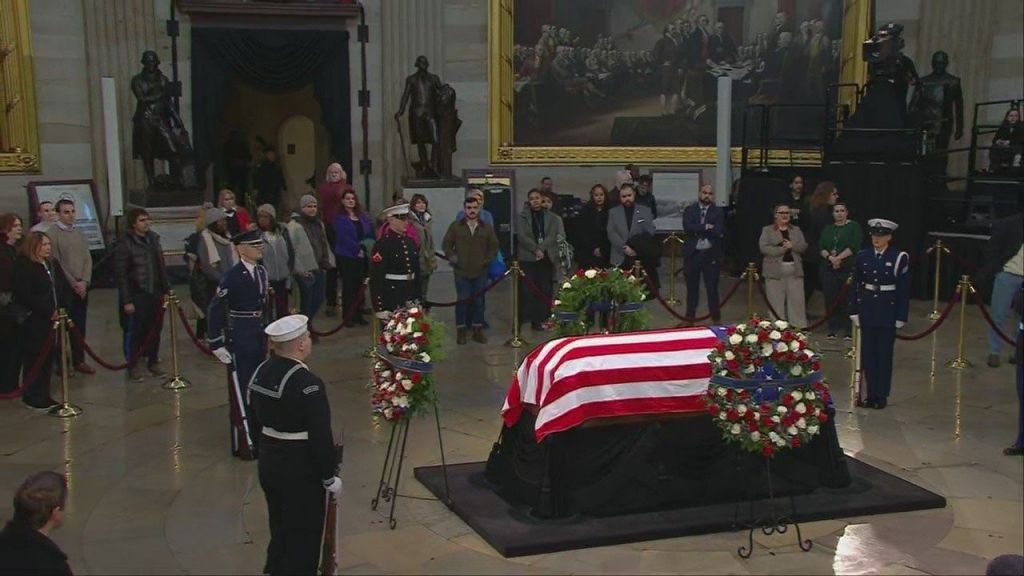
Jimmy Carter lived a life of service. Coming on the heels of Watergate he prized honesty and integrity above all. He put the needs of the nation ahead of his own reelection. He had hard conversations with the American people about addressing our unsustainable energy consumption. He asked for sacrifice and the American people chose the comforting lies of a Morning in America built on debt and inequality.
There is no doubt in my mind that if Jimmy Carter had caught a break and there was no Reagan Revolution we would be living on a cooler planet with far less disasters with a much smaller national debt.
He was not a strict liberal. He ushered in an era of deregulation for good and Ill. Enjoy a craft beer, thank you Jimmy Carter. I thought of JC when I had a local brew last night.
His deregulation of the trucking industry combined with the rise of OPEC led to the financial ruin of my owner operator truck driver father. I might have shared the bitterness and blame if Jimmy Carter hasn’t spent most of his post-presidency building houses for poor people.
Habitat for Humanity and the Carter Center are why President Carter is widely seen as the greatest ex-President in American history. His tireless work for peace from his modest home in Plains Georgia was simply amazing.
The New American Community is compiling a virtual thank you and condolence for his family. Please consider sharing your personal thoughts with the Carter family here: https://zfrmz.com/ljHvjD51SP8hZnF4QSJq
Ann Peters Localist Hero
During my first campaign for Columbia City Council I was encouraged by my consultants to reach out to Ann Peters. She could be difficult but could be a real workhorse if you could work with her. I found Ann to be delightful. Straightforward and gruff with strong opinions but she was my most reliable campaign volunteer.
She would drive while I knocked on doors which would double my numbers. I won that race primarily on my door knocking. While we drove around we’d talk policy and life, and became good friends.
I remember going to this bombed out trailer which didn’t even have a complete roof. Ann saw a light on and insisted I go talk to him appealing to me as a social worker. It was this totally obscure conspiracy theorist who told me about his documentary on a pedophile ring in Iowa. He neither needed help nor could vote for me as he was relocating.
Ann and I went out to Waffle House after my watch party. She was a good friend and was active as a Columbia Planning and Zoning Commissioner. She fought developers and pushed for the tree protection ordinance, storm water reform, and other sustainability changes. She also rejected NIMBYism and has a keen appreciation for infill projects.
She also was big in the No Kill movement and did some proselytizing on me to address the issue. We had our first falling out over her lack of faith in Health and Human Services oversight over the Humane Society. She called me “dangerously naive” and hung up on me when I wouldn’t demand animal control records on a Friday afternoon, certain the Director would forge numbers over the weekend.
I didn’t get any help in my next two campaigns. I did help her on her County Commission race. I was skeptical but felt I owed her the help. As I saw her run I saw her largely rise to the occasion and I became convinced enough to choose her in the privacy of the ballot box.
I felt though Ann could be rash and difficult ahe would be a bulldog for progressive change. She was smart but had a reading disability. I would have liked to have seen Boone County staff rise to the challenge of having her in leadership. She came in a respectable third I believe and didn’t embarrass herself.
She endorsed the Republican after the winner of the Democratic primary had done some negative campaigning. I had endorsed him myself over a complicated matter of a County law suit over late Tax Increment Financing reports, so I might have encouraged this.
Ann left public affairs for a quiet life in a farm she owned with her sister Betsy. She gave me some heirloom tomatoes and peppers when we visited over the 4th of July. She had developed a quiet solidity isolated on the farm through COVID and beyond. She seemed at peace.
She loves the land and loved Columbia. She left a lasting legacy with her successful work in electing progressive City Council Members, including myself, important work on the spay and neuter clinic and her 5 years on Planning and Zoning.
We were sideways again when she died. I wish I would have been more supportive in the situation that led up to our last tiff.
January 6th
It’s January 6th which means I have to get political. I prefer to tell stories, document an interesting day, share a life hack or pro trip or brag about my travels. Not today.
Today is about organizing. The New American Community formed on July 4th, 2024 to revitalize rural America and other forgotten areas through fostering local activism. Our mission is to identify, train, and support an organ in every county in America.
Today we launched our County Party Organizing Project (CPOP). We have assembled a data base of County Party leadership and I have been calling State Party leadership to see about coordinating our efforts. I have had promising early conversations in Kansas and Missouri and had planned to move forward here to mark this day.
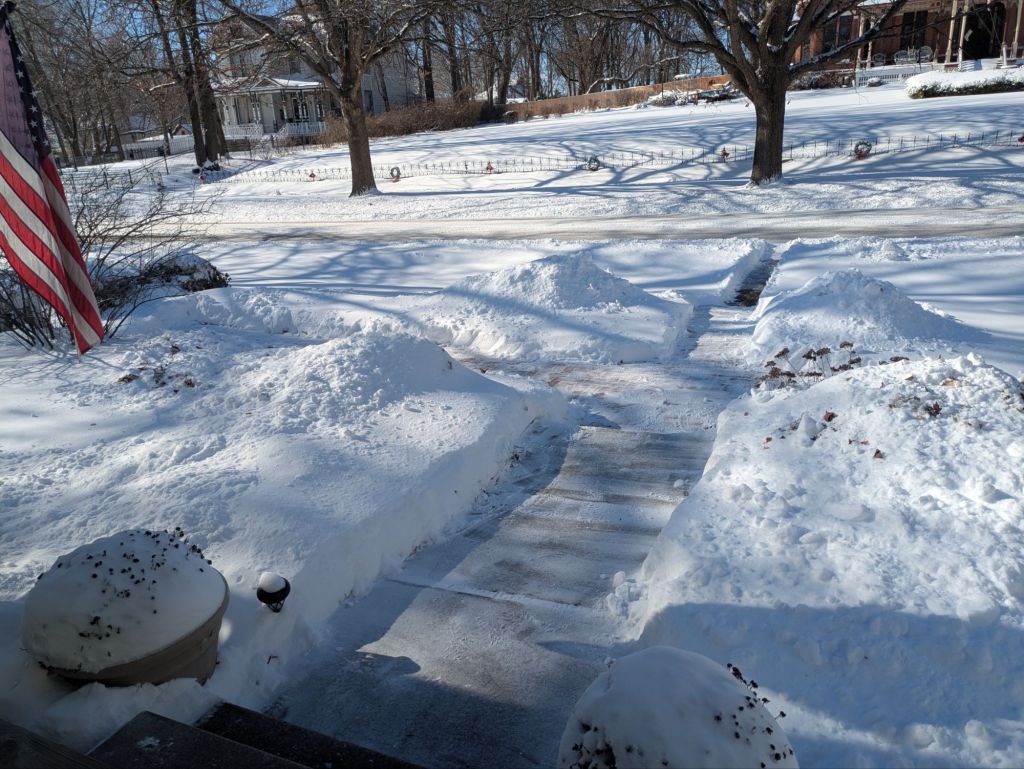
Mother Nature had other plans. Some ice and sleet and literally a foot of snow kept at me to shovel sidewalks, porches, and decks. I also had to shovel out the van. I’d already shoveled it out once to get it in a side street since we’re a snow emergency route. I parked it on a hill and ran it out of gas. I have to shovel out the alley now to get the Yaris out with a gas can.
While I was warming up though, I did some research in Texas, where there’s not a blizzard, and reached out by phone and email. I’ve got more leads to chase down tomorrow, if you pile up messages someone is going to call you back. Most people are going to want to do something if you make it meaningful and easy. So that’s what we’re doing.
We’ve also been emailing our contacts and following up with interested activists. It feels like we are at the beginning of great things. We are calling it localism. Empowering local organizers to address hyper local issues and rack up wins through community organizing, direct action, and mutual aid instead of just trying to win elections every 2 years.
We’re also asking questions and listening. We have a draft of a survey we’re shopping around to stakeholders. We’re completing our data bases and getting our nascent social media up and running. And shoveling snow.
If you want to get involved sign up on our website: https://newamerican.community.
 Multiconstruct
Recent Comments