Archive
Stoic Spiritual Exercises Cultivating Temperance
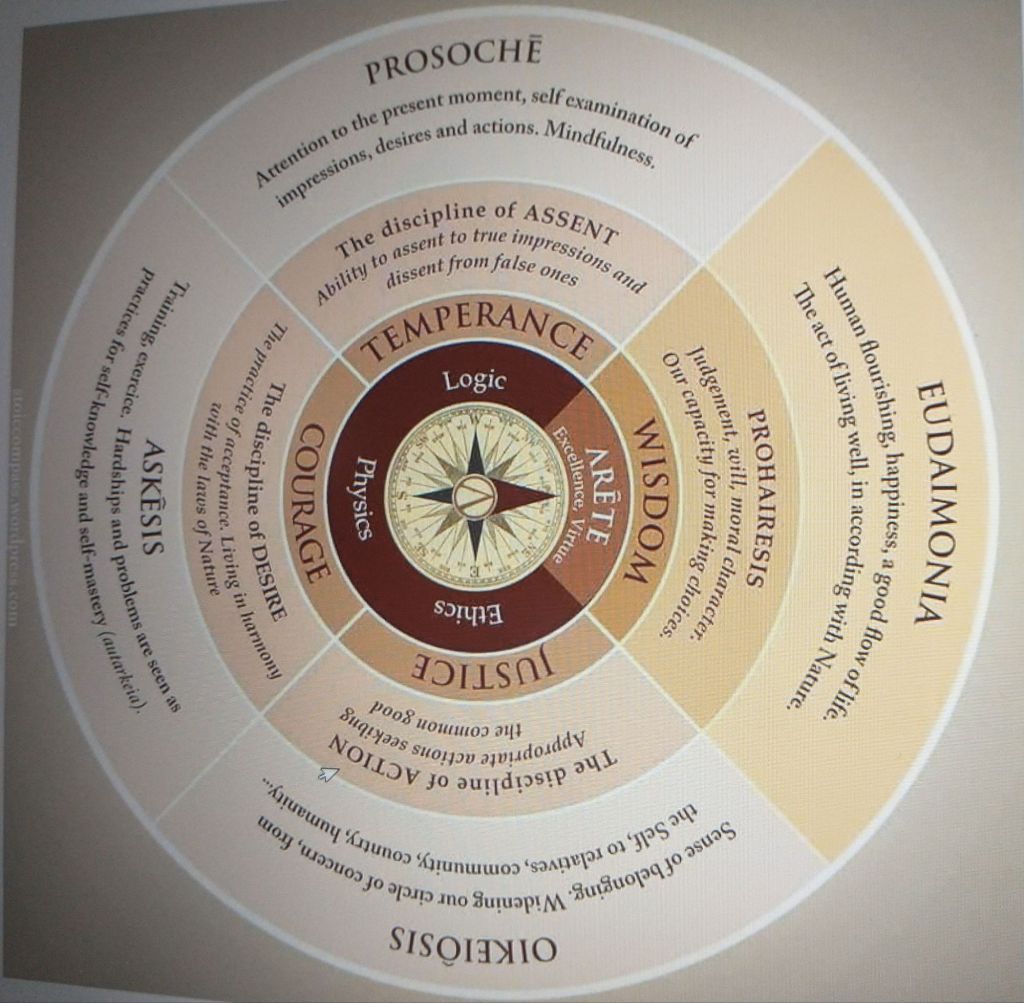
For the fourth week of spiritual exercises I completed last week I focused on Temperance. Stoics associated temperance with logic which got me to thinking. I am a longtime substance use disorder counselor and a lot of recovery work is rooted in learning to be honest: “I made a searching and fearless inventory”.
The discipline of assent is catching ourselves from making value judgements about things outside of our control. We learn that the only good is moral good. When an event happens it is only a terrible thing if we decide it is.
This honest assessment of reality is a path to freedom and living without fear. Dropping our inner deception allows us to grow in our ability to control our desires. We train ourselves to focus on what is in our own power and this allows us to do things we want to do and not do the things that we don’t want to do.
When we feel good about ourselves because we are taking right action then we are less susceptible to falling into unhealthy coping mechanisms.
Research backs up the stoic approach. Mindfulness work is an important part of treatment and recovery. Self discovery allows us to look at ourselves and see what the drivers of our self defeating behaviors may be.
I made a Facebook reel talking about Temperance which will work until 2/26/26 https://www.facebook.com/share/v/1BpDGBd8GK/
For the spiritual exercises I switched my coffee to black and was mostly vegetarian. I monitored my portion size and steered clear of fast food. I refrained from alcohol with the exception of a couple of drinks with a friend as I’ve been a bit under socialized. I also maintained my other exercises of physical exercise, daily justice work, and study and meditation.
It was a successful 28 days which has helped me focus and make concrete improvements. I plan to do them again in two years.
Stoic Spiritual Exercises – Cultivating Bravery
I’m deep into week 3 of the stoic spiritual exercises and tomorrow I will launch the final week and wrestle with Temperance. I have been busy and am only now getting to post about Bravery.
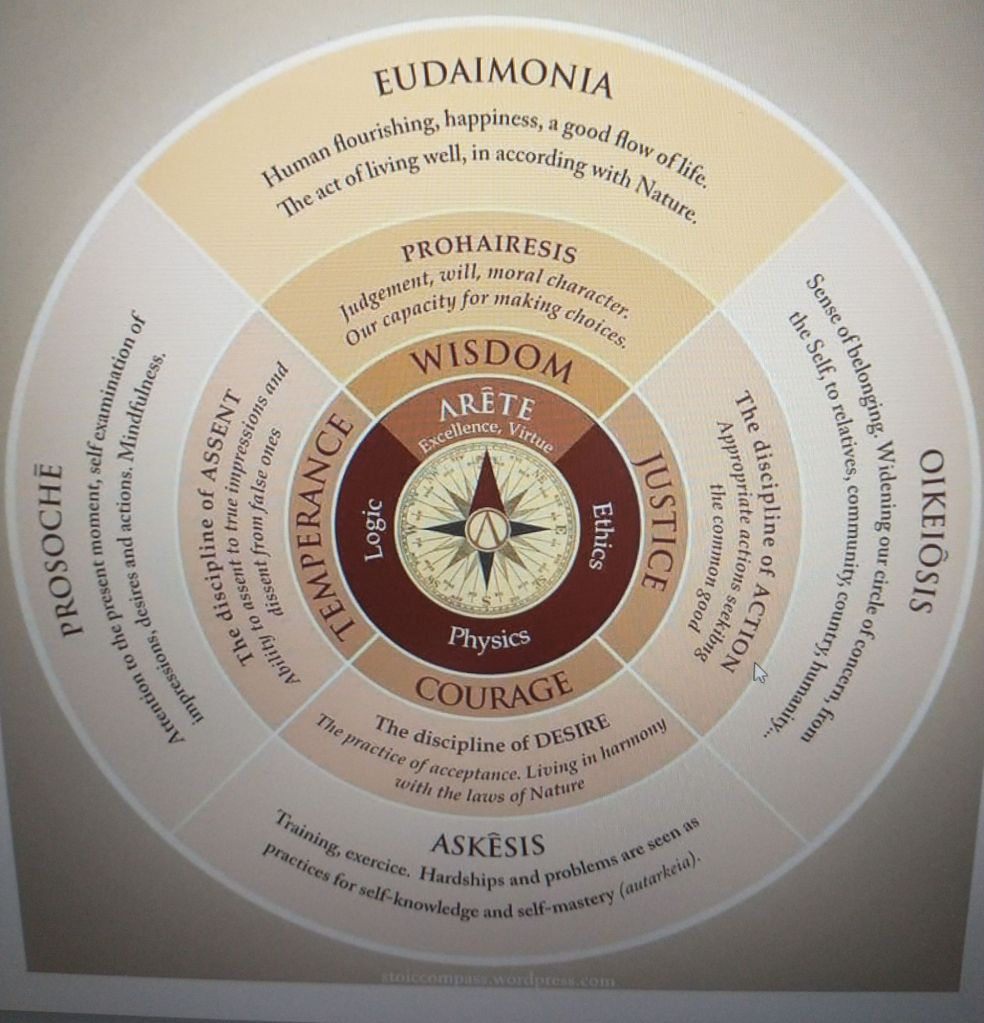
In the Stoic tradition Bravery has to do with the Discipline of Desire. What we desire is one of the four things that are under our control along with our opinion, moving toward a thing, and aversion. Bravery is rooted in recognizing that virtue is the only good and if we desire our life to be in accordance with nature we care little for external events.
What concern we do have for events is rooted in Amor Fati or Love of Fate. Whatever befalls us is necessary and an opportunity to exercise virtue. I’d something unpleasant or difficult occurs it’s a. Opportunity to practice forbearance. In frightening times of folks being gunned down in the streets it is an opportunity to practice bravery.
Alex Peretti gave a master class on bravery. He showed up and documented and tried to help. He was inviolate in his virtue. Though an ICE officer took his life they could not touch his spirit of resistance which is a bright flame that guides us all now.
The spiritual exercises this week have focused on physical health especially weight training. Becoming stronger physically can also inform our sense of self and allow for greater confidence and courage to take on tasks. I have maintained my work out routine and added a walk on a cold day and being mindful on my snow removal.
I did make a Facebook reel on the virtue. https://www.facebook.com/share/v/1FYabN3eno/
I’ve also been doing a morning and evening meditation to set my intention for the day and then reflect on how it all came out. You can find them on my page. Twice a day posting and they e added up quick. The links only work for 30 days so sorry future readers. https://www.facebook.com/share/1RoH3YL6rn/
You can read the chart what the virtue means. I’ve been slow walking myself through the chapter on Discipline of Desire in The Inner Citadel by Hadot. It focuses on aiming our desires exclusively to moral good. Amor Fati means we love our fate as a rule because it’s necessary and an opportunity to practice virtue.
I’ve embraced the cold and living in a time where my government executes community observers in the streets. It’s made for an intense week which is why I’m only getting to posting the weekly virtue at the end of the week. Tomorrow I’ll introduce Temperance on Facebook Live at noon. Hope to post here Wednesday evening.
Be brave. Keep the faith. Solidarity, Community, Empathy.
Stoic Spiritual Exercises: Cultivating Justice
I am beginning my second week of stoic spiritual exercises. My last blog post was about cultivating Wisdom: https://multiconstruct.blog/2026/01/07/cultivating-wisdom/
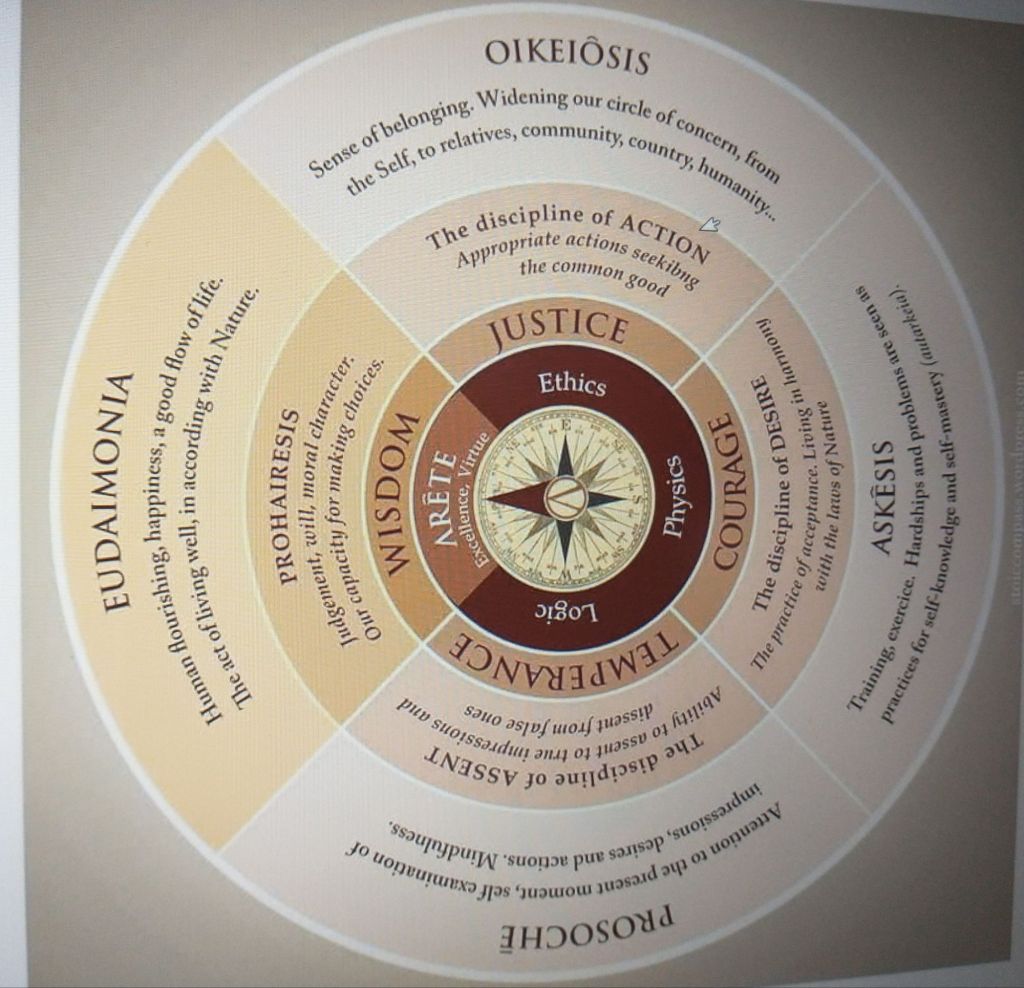
Justice corresponds with the discipline of action. Each of us has the power to choose to move towards a thing and to move away from a thing. No thing is in our power but that does not stop us from pursuing goals and trying to achieve.
Stoicism is powerfully rooted in the individual. Virtue is the only good and virtue is the exclusive domain of our own actions and opinions. All else we cultivate an indifference towards so that we remain free and have a happy flow of life.
When we act, we must act in accordance with nature. When we observe other living things we see that they take action to obtain food and shelter, procreation, and the rearing of children. Humans are no different but we meet our needs socially in cooperation with others. Acting in accordance with nature requires right living and consideration of others. Stoicism is rooted in cosmopolitanism.
Self awareness begins when we are toddlers but it is many years and much growth before we learn that other people are conscious as well. We call it the narcissist dilemma. My thoughts and feelings are real and important because I think them and feel them, and others’ thoughts and feelings are mere rumors.
As we mature we realize our parents have feelings and needs and are not just characters in our story but are the protagonists of their own narrative. The rest of the family, my neighbors, other townspeople, and personal associates are all the same. We bring this understanding to our state, country, and in its most developed state all the people of the world.
Beyond that we think of all the people of the future. We share the same resource base and the decisions we make impact their lives. I want to leave more of a legacy than resource depletion and micro plastics; waste, debt, and bullshit. I want to leave the children something good.
This is Justice. Weighing our own interests as co-equal with all others. We give primacy to the people in front of us for sure but we are all bound together in a collective web of reciprocity and shared habitat.
We have to take in information and make decisions with others in mind to live a life of justice. Right actions, done at the right time, for the right reasons is what it means to live a just life.
I did a talk on Facebook today if you want a deeper dive: https://www.facebook.com/share/v/1DvjEJ3Xgs/ It’s only going to be up for 30 days. If you like what I have to say but my book: https://breadandrosespress.com/products/the-practical-guide-to-building-a-better-world

Cultivating Wisdom
Today I kicked off 4 weeks of stoic spiritual exercises. I have framed the exercises around the four virtues: Wisdom, Justice, Courage, & Temperance. This week I want to talk about wisdom.
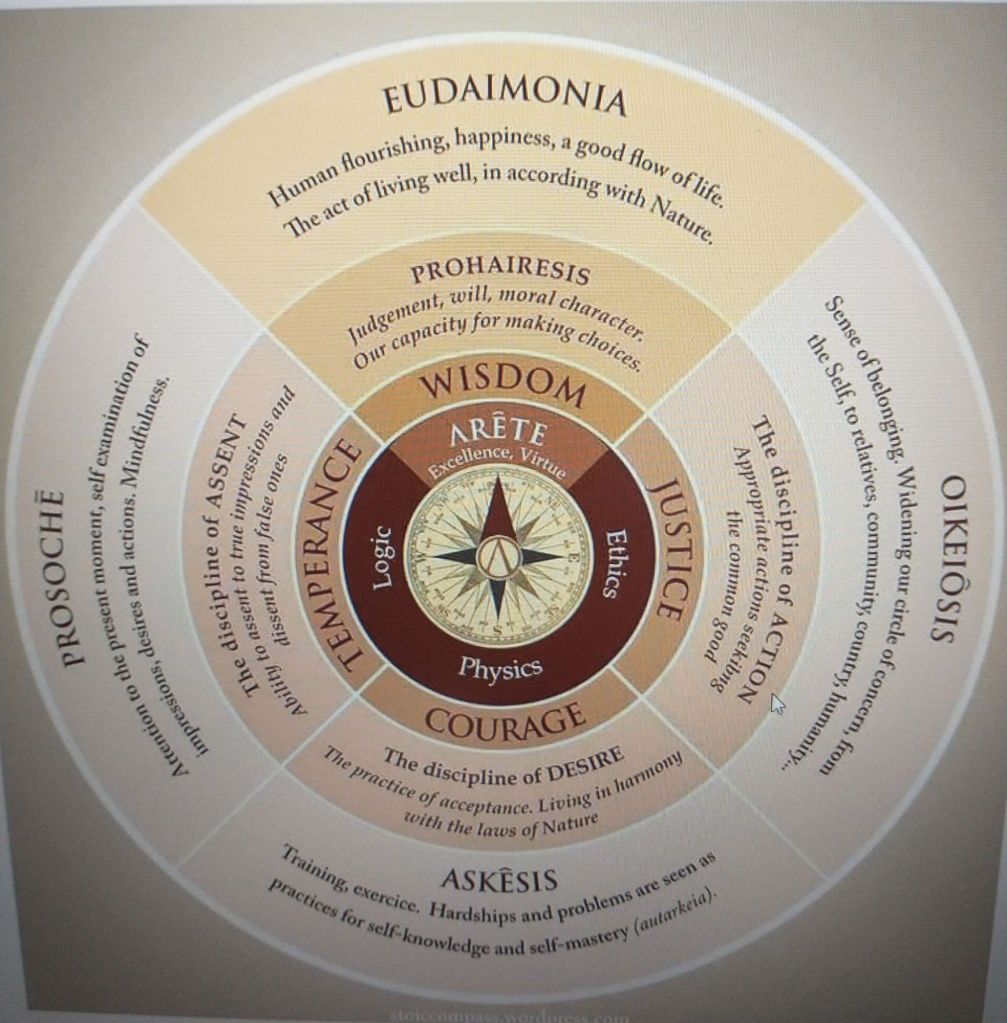
Philosophers get their name by being lovers of wisdom. Wisdom is not only knowledge but practical knowledge. Knowledge that informs our actions that allow us to be happier and more effective people. To exercise judgement and build our moral character.
Eudaimonia is a happy flow of life. It is living with purpose without being disturbed. Arius a disciple of Epictetus distilled his teachings into a small book called The Enchiridion.
The Enchiridion opens with: “Of things some are in our power and others are not…” Then he makes the definitive list of what those things are: Opinion, Movement towards a thing, Desire & Aversion or in a word, whatever are our own acts. Note, that no thing is in our power but the ability to strive towards a thing are well within our control.
Not in our power are the body, reputation, offices (magisterial power) and wealth, or in a word, whatever are not our own acts. Magisterial power has to do with holding an office or facing legal issues like going to jail or prison.
He goes on to talk about the nature of these categories. The things in our control are by nature free, not subject to restraint or hindrance. No one can force you to change your opinion or your goals, what you like and what you don’t like. These things alone are inviolate.
The things not in our control are weak, slavish, in the powers of others. Right living then becomes an act of categorization. Is this in my control or not. The wise person toggles between bravery and acceptance depending on the nature of the situation.
Epictetus then tells us what happens when we confuse what we own with what is in the hands of others: We will be disturbed, we will lament, we will blame both gods and men. The worst thing that can happen to someone is to be excuse ridden. If you don’t take responsibility for your life you can’t change it.
He also gives the promise that if your only concern is your own actions and you realize this is your only concern: you will blame no one, you will accuse no one, no one can compel you, and no one will harm you because you cannot be harmed.
You can take my car, slander my reputation, and jail my body. When I realize none of that is my true concern or an impediment to my will then none of that is really harmful.
So this week set a goal of self improvement. Take a look at the Enchiridion or Marcus Aurelius’s meditations. Put down the social media and open a book. Take 5 minutes for relaxation or meditation. Commit a helpful point to memory. Fall in love with wisdom all over again.
You can also follow my daily morning and evening meditations https://facebook.com/events/s/morning-meditation/1596039878200918/
https://facebook.com/events/s/evening-meditation/1433127815047245/
All Over the Place
When I read my old posts I mostly just gave a rundown on what I’ve been up to and how I’ve been feeling. With the book coming out, stopping CorrCivic opening a detention facility, running a PAC in a tough world of national democratic fundraising, cooking and eating food, the house and the yard I’m jamming all the time. I’ve sworn to stop that and embrace the puttering pace but that vow has been overwhelmed by events.
On to the good stuff and the victories. I had a nice profile piece done in an online Minnesota publication. https://voyageminnesota.com/interview/meet-mike-trapp-of-leavenworth-kansas/
The book is out and I have the official launch planned for Leavenworth at the Red Hibiscus on July 8th 4pm-6pm. https://facebook.com/events/s/ribbon-cutting-mike-trapp-book/696092123306330/
With all that I managed to insulate my cubby. Our historic home was a rental so first steps have been eaves, shoring up the crumbling brick and gaps in the retaining wall.

If you want to buy the Practical Guide to Building a Better World. See me and save postage. Today I’ll be in Columbia through Tuesday. Hit me up if you want to hook up with a book. You can also pick one up from my publisher.https://breadandrosespress.com/products/the-practical-guide-to-building-a-better-world
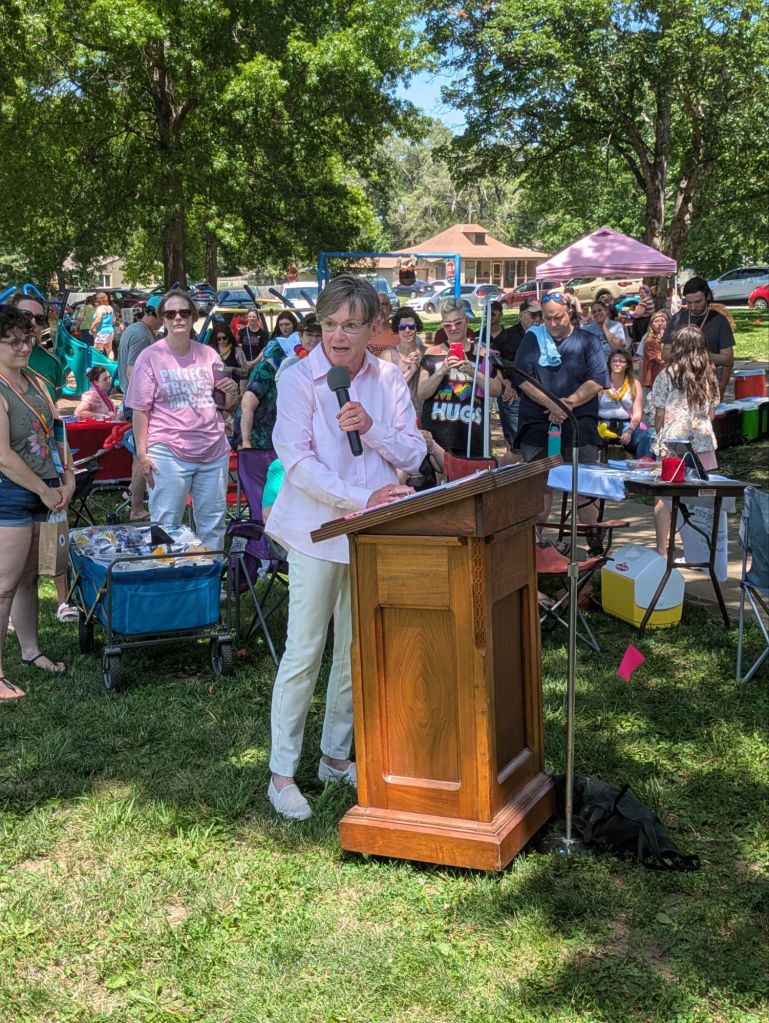
I also caught Pride and gave the governor of Kansas a book and told her to run for Senate. She said “hell no” so I met with another great prospect yesterday. Gave the Christian Nationalists some words at the County Commission on the dangers of Christian sectarianism and a little lesson on Jesus’s core message. It’s a lot and it’s all over the place and I wouldn’t have it any other way.
Think Nationally, Act Locally
I had the great pleasure of speaking to the Boone County Missouri Muleskinners on Friday for their weekly meeting. It was over Zoom and it went pretty well. They put the video on their Youtube channel. It begins with my friend Alyce Turner introducing me and reminding me of my biggest political defeat when I chaired The Committee for Rollcart Choice to try and keep Columbia, Missouri from banning automated trash collection. She references restoring recycling because Columbia’s Materials handling center was recently destroyed by a tornado. I’m posting the video link if you care to see the presentation. https://www.youtube.com/watch?v=CQf30-2Mies
If you prefer to read, here are my prepared remarks.
After writing a book on winning elections, governance, and advocacy I first need to make clear that my approach to politics is fundamentally different. Almost all political discourse in the US is around state and national issues based around a right/left dichotomy. Worse, the political discourse is heavily focused on horserace considerations more than substantive policy discussions. Rhetoric and sound bites play well on social media and cable news and politicians today exist who only have a political strategy and no strategy at all for governance.
As a longtime grassroots activist with a focus on building community with an anarchist’s heart and an ecologist’s focus on the bioregion I had a fundamentally different approach to politics. When I ran for city council my focus was not on pursuing any ideological victories or building a political platform for future political advancement.
When I was thinking about running, I asked the “why” question. I decided as a candidate I would run on my values but if I won, I committed myself to a governance agenda that recognized my fiduciary responsibility to the city as an organization, as a placeholder for long term capacity to ensure resident services. I also committed myself to the care and well-being of the 1,400 or so employees. I also decided that the concrete (sometimes literally) facts on the ground were more important than more ephemeral things like my political career and my constituent’s feelings about how the city developed.
My focus on good government challenged me to respect city policies and internal capacity and to focus on regular improvements and long-term planning. I long argued that as much attention we place on state and federal issues it is local government that matters most. Local governments operate utilities; electric, water, sewer, solid waste; deliver public safety with police, fire, and the courts; we guide and facilitate economic development, pass local laws, make land use decisions and more. From what it takes in taxes, fees, and other revenue compared to what it delivers, local government is the best value in politics. Politics even takes its name from polis, which means city.
All these points are well and good but what do they mean in an age of rising authoritarianism? They mean everything. An authoritarian agenda needs all levels of government to control the people and fulfill its awful purpose. One of the real strengths of our country is our system of decentralized power and local control. From voting to education to policing to land use, the patchwork of local systems that make up most of our governance systems serve as a check and balance from any group asserting a national governance agenda.
An approach that I call localism tells us to defer on national ideological agendas. Instead, we should look to our own local conditions to inform our path of building long term progressive change and protecting freedom and democracy. In Leavenworth, Kansas stopping CoreCivic from reopening their troubled detention facility as an ICE deportation center presents as the obvious issue to rally around.
CoreCivic through their chronic cost cutting and casual disregard for their employees, their detainees, and the law make themselves an obvious target. We highlight their long and spectacular malfeasance rather than the large national issues around immigration. We bring everyone to the table who wants to stop the facility from reopening with no litmus test.
As we work on this specific issue we strengthen our alliances, our individual and collective capacity, and the belief in the community that they can make a difference. Having a deep knowledge of local processes, relationships with the local power structure, and the unique political pressure points for local actors which can help guide messaging and approach has been critical in the success of the campaign.
More importantly we are manualizing our approach. We are telling the story to inspire action across the nation. We are also making connections with other activists in other communities who are fighting the same struggle. The national zeitgeist expresses itself within local communities and is best combated and ameliorated within communities based on their own conditions.
If you liked what you read and are interested in learning more about the practical realities of activism consider ordering my book. We should have books in this week, and they should ship the week after. https://breadandrosespress.com/products/the-practical-guide-to-building-a-better-world?fbclid=IwY2xjawKQPpNleHRuA2FlbQIxMABicmlkETFFRVdlMTdjQ0U5ZXFIeUhJAR4t9VcKwAmjbC0TRFkPMrp5PdLY9Boh372cUz-qdfq5rkuO7zFoWKmKtbDZLA_aem_O46YqlaAoNU-5hWACdnx4g
The Practical Guide to Building a Better World
I can’t believe I wrote a book. What was only an idea at the end of 2023 is this giant beautiful thing becoming more real every day. The milestones have come so thick I have not been able to celebrate each one. Today I want to acknowledge the ISBN #
The Library of Congress is under attack. The President fired the Head Librarian without cause and claims to have appointed the Deputy Director of Commerce, I think, as its head. The staff there point to the name and the fact that the president has no power over the Library of Congress and had two folks escorted from the property. The alleged new acting chief librarian has not yet tried to enter.
Having a book enter the Library of Congress has been something I’ve looked forward to as I moved my manuscript from rough draft to a perfected piece of physical media. I am not surprised that every good thing is under attack. A would-be authoritarian’s desire to control the Library of Congress is understandable. Preventing that misuse of power is baked into the system. We shall see what prevails.
Today, I still celebrate and proudly share my ISBN # 978-1-939899-86-6

You can preorder at Bread & Roses Publishing
https://breadandrosespress.com/products/the-practical-guide-to-building-a-better-world
Podcast and Book Preorders
There has been so much going on my head is spinning. Achieving some big milestones is huge but it still leaves you to manage all the change and the innumerable details that need to get nailed down when you succeed.
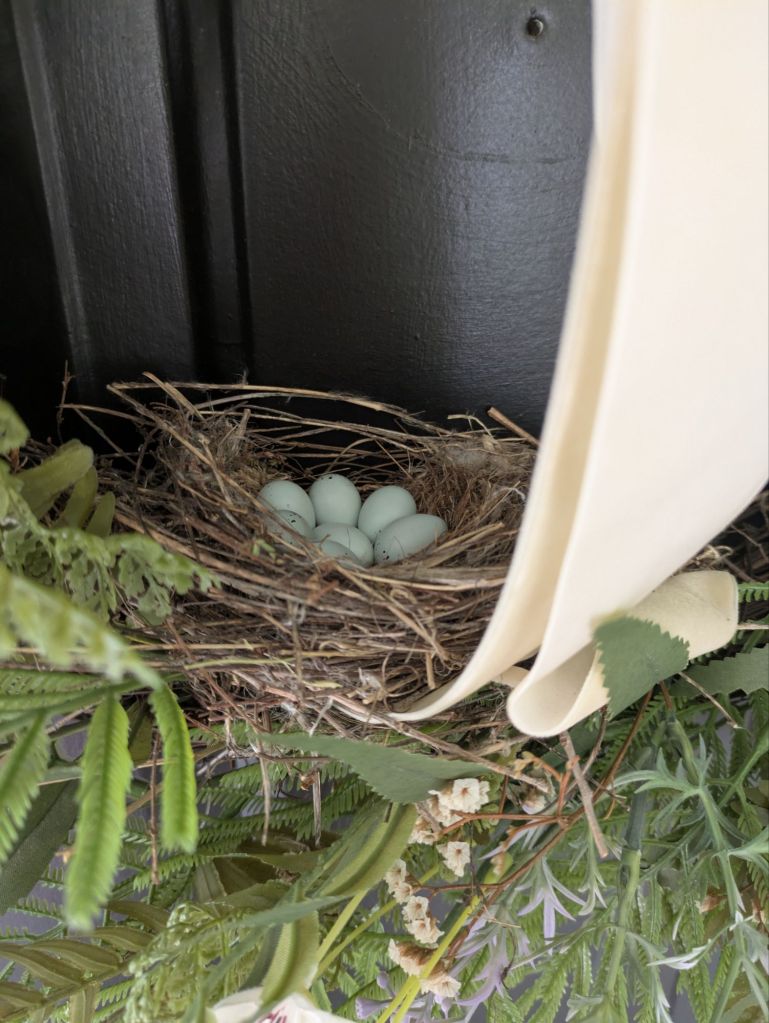
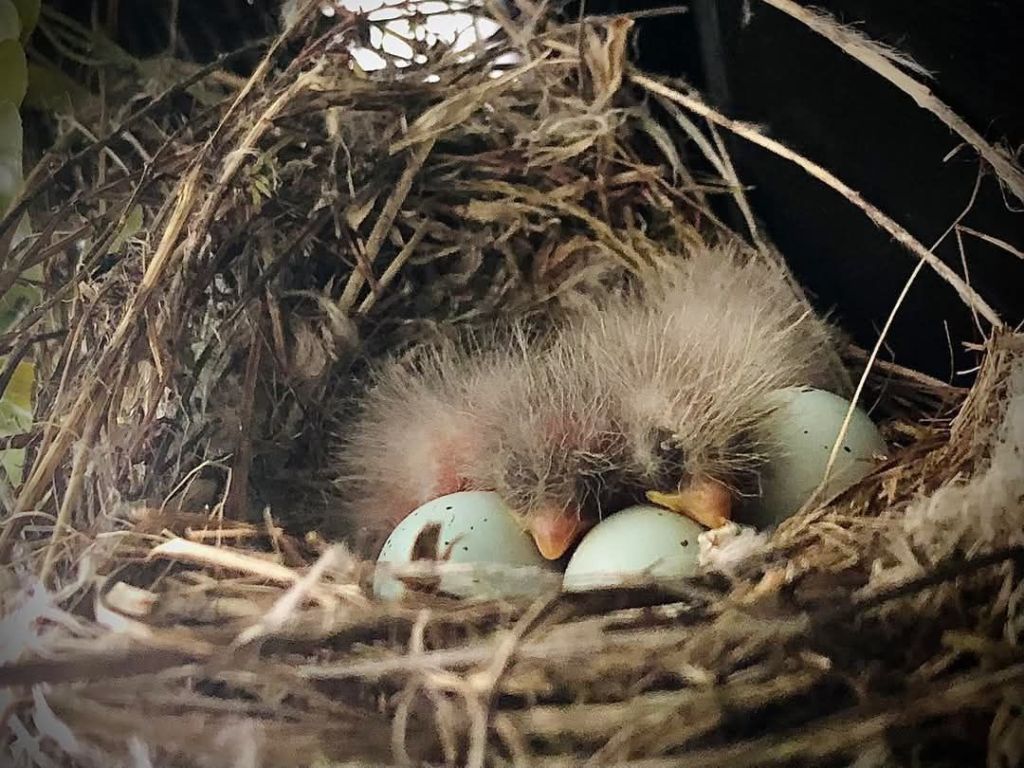
Before I get into that some of the eggs have hatched in the House Finch nest in the wreath on our front door.
All of the projects I have been working on seem to be coming together at the same time. At the New American Community we have been leading the local opposition to keep CoreCivic from reopening their troubled detention facility as an ICE detention center.
Through our work on the issue we came to know William Rogers a former corrections officer who has become a leader in exposing their understaffing and unsafe conditions for staff and residents. Mr. Rogers was kind enough to share his story on our first podcast episode.
https://newamericancommunity.podbean.com/
On the literary front Bread and Roses Press has The Practical Guide to Building a Better World at the print house. Presales are open and we should have books in June!
https://breadandrosespress.com/products/the-practical-guide-to-building-a-better-world
Thank you for support and follow along here or at Https://www.miketrapp store or Https://www.newamerican.community for the latest updates on the book, podcast, and organizing events and materials.
Community Outreach for Mass Mobilization
With all that is going on nationally being engaged in a national political organizing project is a real blessing. I don’t feel powerless and alone in front of the giant forces threatening democracy and the rule of law. Taking action and talking to other organizers is heartening and I highly recommend it.
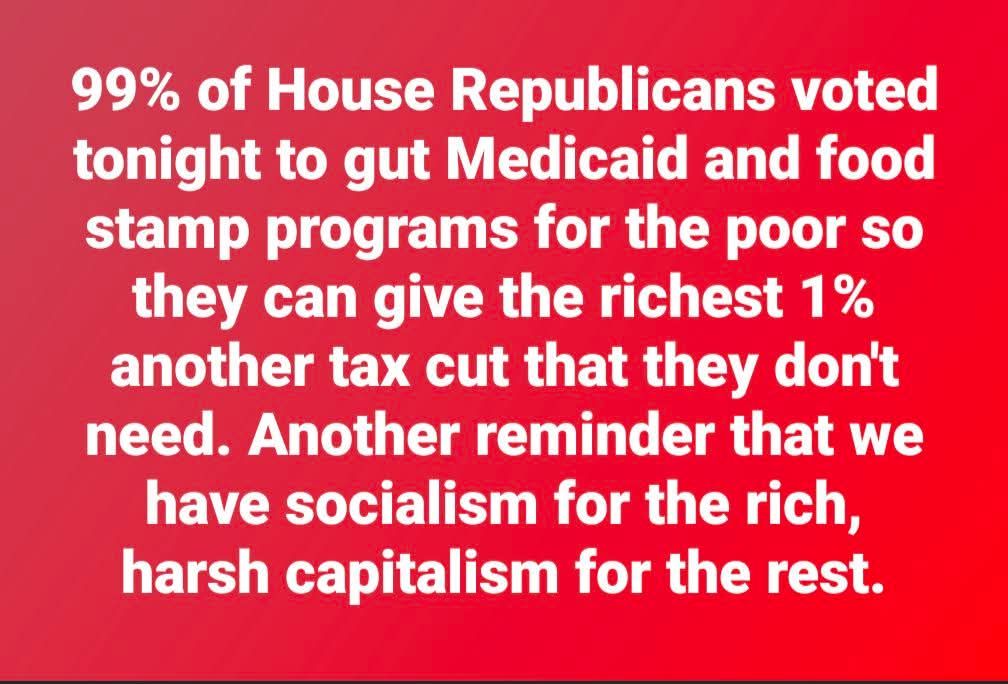
The New American Community is moving into the next phase of our County Party Outreach Project. I have called all of the state parties and had some great conversations and several active collaborations. Delaware and New Mexico are helping our outreach efforts and have agreed to work together. Several other states are reviewing information or have made a commitment to work together in the future. As a political unknown outside of my region though it has felt a little like cold call sales.

We also have received almost 150 survey responses from county party organizations. Reviewing the responses help with Messaging is the largest unmet need. We created our survey as good community organizers both to have feedback to inform our work and to identify collaboration opportunities.
This week I’ve contacted county party leaders who completed the survey for follow up conversations. I’ve begun providing technical assistance to some party organizations and also discussed what people are doing.
What I found inspiring was the three conversations I had all said the same thing. We are focusing on community outreach because we need to know who is out there in case we have to do a mass mobilization to fight for democracy. From rural South Carolina, to a small city in Missouri, to the New Mexico suburbs the answer was the same.

We have found our Message. Democracy and the rule of law are under assault and we need to take action with our neighbors right now. The pro-Democracy Alliance is forming at the grassroots level everywhere. There is new energy to fight back and defend and folks aren’t waiting for non-existent national leadership but are leading themselves. Finding like minded souls in organizations or online and taking action.
Democrats and Direct Action
I cut my teeth in political organizing around direct action with a long term focus on building a community of resistance. I found it far more energizing than electoral politics, more immediate, and far more fun.
Speaking truth to power and engaging in active non violence shaped who I was. I also engaged in influence campaigns that worked within the system. As a young field organizer in Utah I helped gin up significant opposition to an inadequate wilderness prevention Bill generating thousands of postcards and turning out hundreds of students at a critical public meeting.
That shifted the Utah delegation and the bill was defeated. The next year a bill was passed that includes an additional 1.2 acres of mostly Red Rock desert permanently protected as wilderness. I thought about that 1.2 million acres a lot and how we freed the weed by petition gathering, voter registration, organizing a GOtV and passing the California Compassionate Use Act.
My support of electoral politics further strengthened as a three term City Council Member in Columbia, Missouri I saw a laundry list of progressive accomplishments and good government wins all through campaigning for votes. As I completed The Practical Guide to Building a Better World, I formed a Political Action Committee to support my national level local organizing.
After the inauguration we all witnessed the unconstitutional and illegal invasion of government systems and employee relations by unaccountable billionaire Elon Musk and his high tech goons. A spontaneous movement on Reddit called 50501 for national protests at state capitals.
I was intrigued but unavailable. I hope as also a little shocked by the general reception by Democrats and other activists not wanting to take part because they didn’t know who was organizing it. Folks who shared information were encouraged not to participate because of a lack of permits and no identified organizers and folks speculates it was a setup.
So most of the folks I know stayed home. But not all. I heard reports from Michigan where the crowd was robust and inspiring and I saw news reports on many other protests.
In spite of being 50 states, 50 protests, 1 day a President’s Day protest was called by the same network. In Leavenworth the local Democrats put out a call and on a frigid day 40 or so concerned citizens came out with signs and flags and it was beautiful.
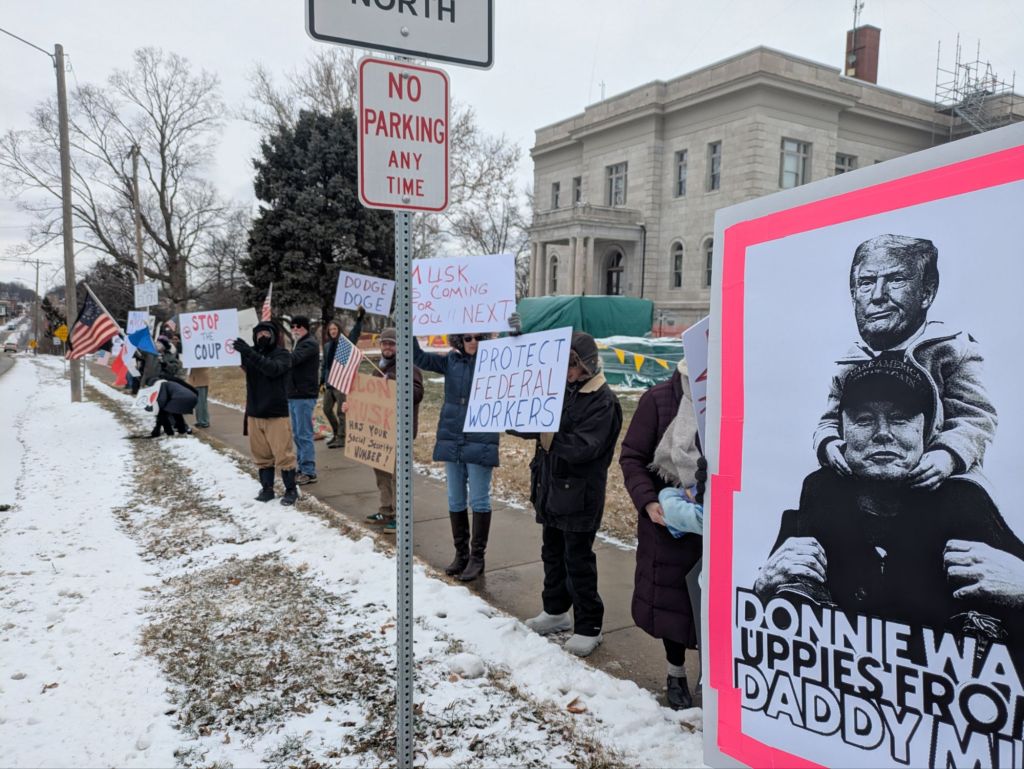
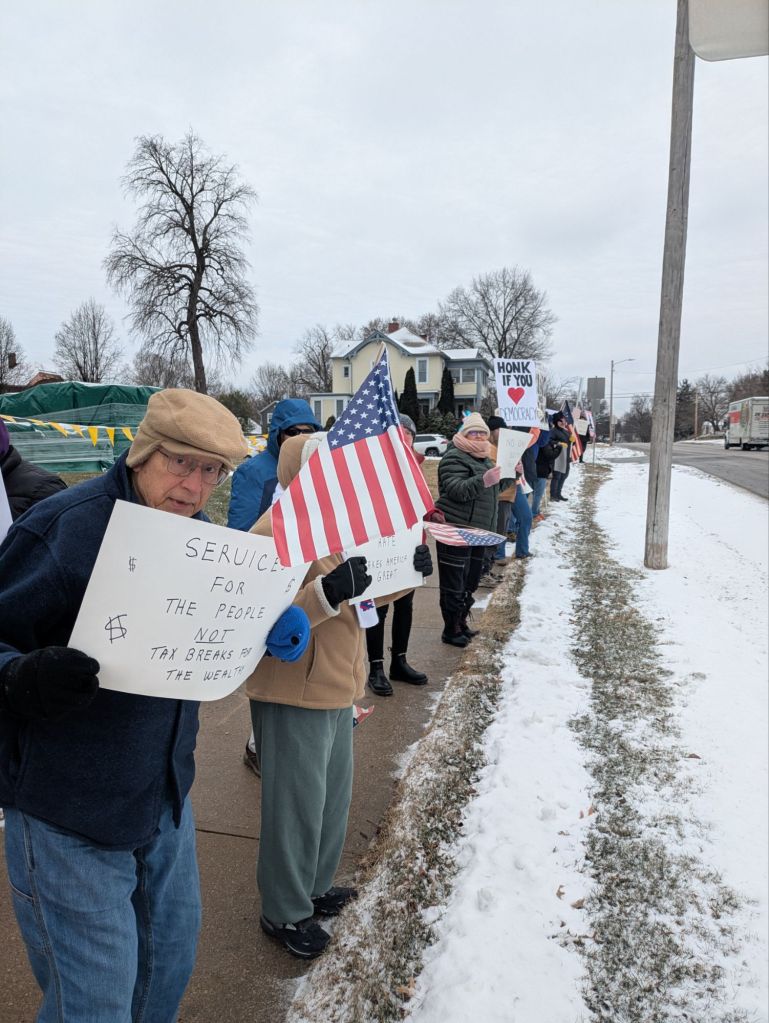
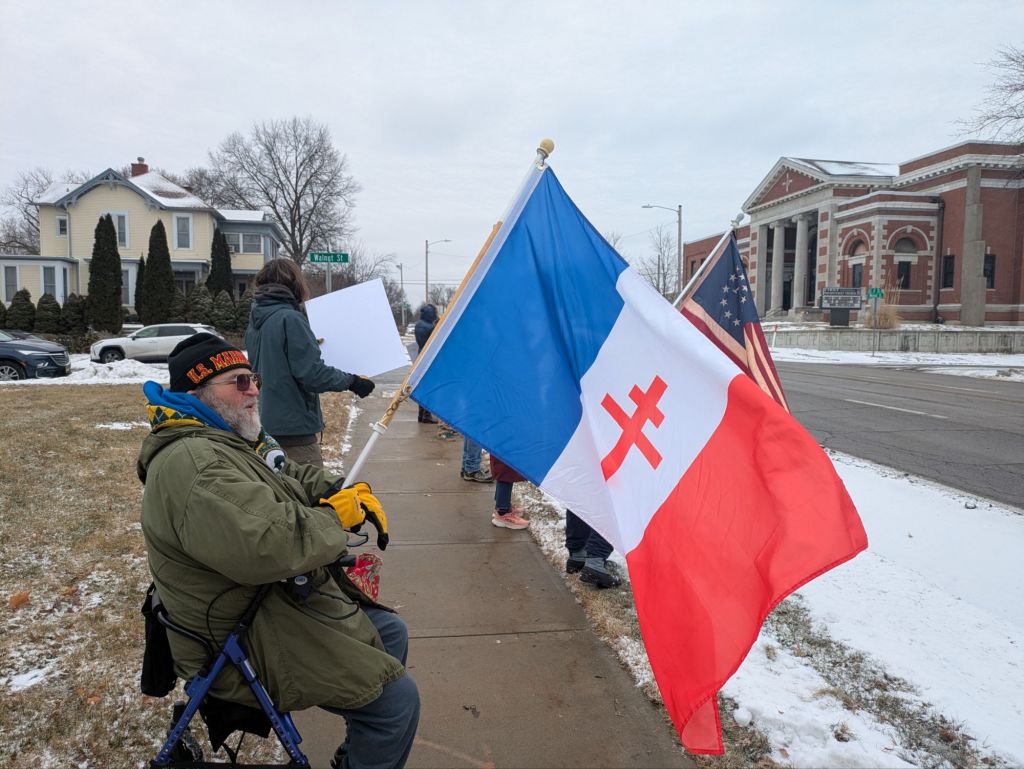
When I got home I enjoyed seeing protest photos from across the country. We think protests need leadership and organization, and both can be helpful to win concrete victories but they are not necessary. During the Vietnam protest era the largest protests happened after the national leadership splintered and went silent. The protests kept growing.
We live in an era of increased suspicion and less and less trust. The more that we can rebuild our ability to organize together on a common cause the more effective we are going to be. The New American Community is embracing and promoting decentralized grassroots movements and we encourage others to do likewise.
We have to be wise. There are agents of chaos and misinformation that drive divisive activities. There are risks to trusting strangers. There are also risks from not trusting others we do not know. The risks of being isolated and powerless and having our cherished institutions destroyed without an effective public outcry.
We need to be wise and structure for safety. Do your homework, withhold judgement, make sure if you go to an action you have an exit plan and support. But please don’t stay at home out of fear. The next big action is the February 28th economic blackout.
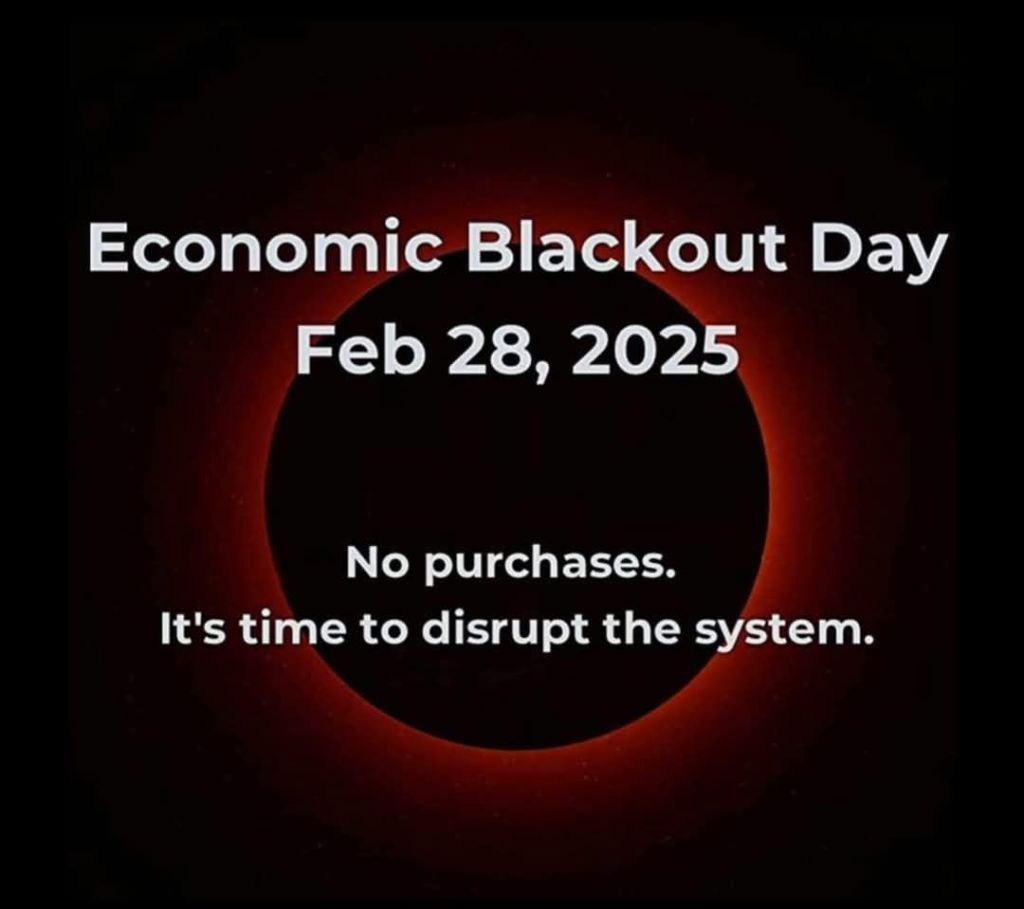
I don’t know who is planning it. I know it makes sense. I know I want to do it. I know it’s safe. Now more than ever we need a mass mobilization to protect our democracy and our way of life. When the call to action is just and proper and good I am acting, whether I know who made the call or not.
 Multiconstruct
Recent Comments