Archive
Stoic Spiritual Exercises Cultivating Temperance
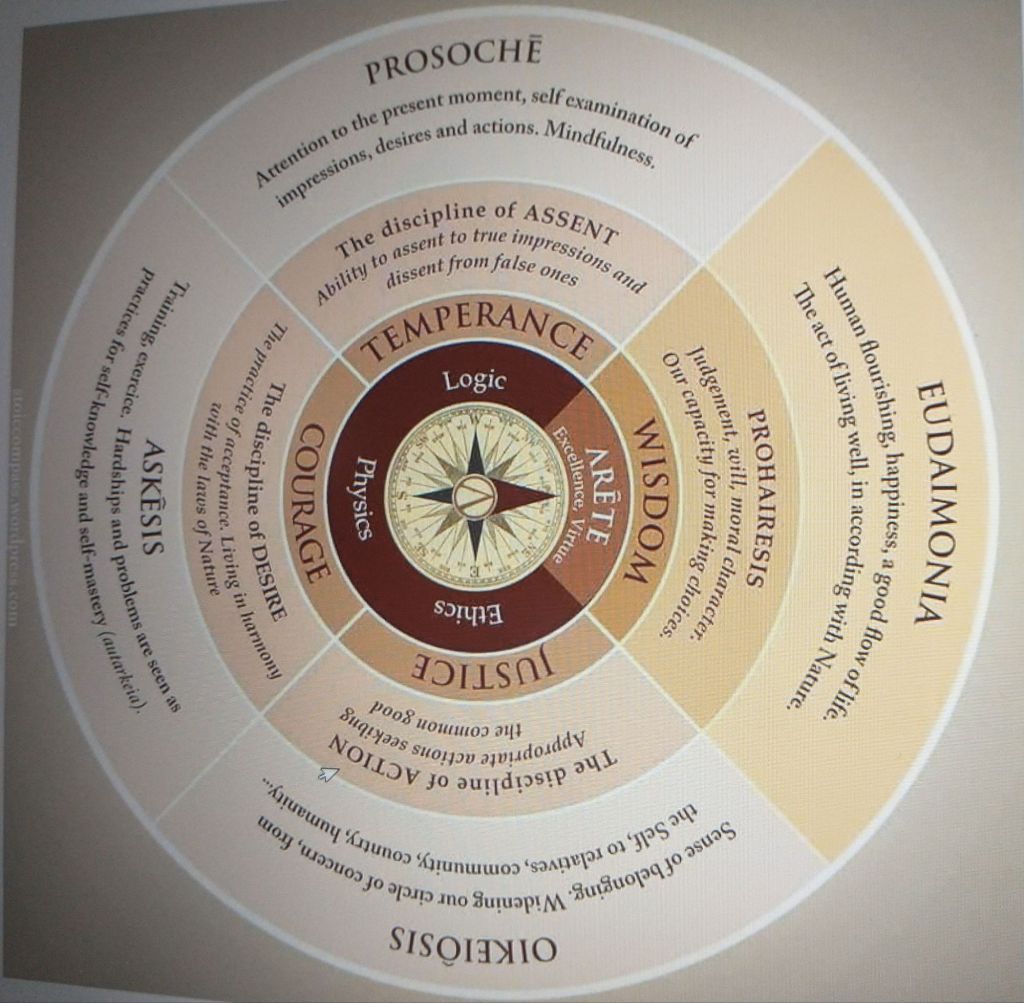
For the fourth week of spiritual exercises I completed last week I focused on Temperance. Stoics associated temperance with logic which got me to thinking. I am a longtime substance use disorder counselor and a lot of recovery work is rooted in learning to be honest: “I made a searching and fearless inventory”.
The discipline of assent is catching ourselves from making value judgements about things outside of our control. We learn that the only good is moral good. When an event happens it is only a terrible thing if we decide it is.
This honest assessment of reality is a path to freedom and living without fear. Dropping our inner deception allows us to grow in our ability to control our desires. We train ourselves to focus on what is in our own power and this allows us to do things we want to do and not do the things that we don’t want to do.
When we feel good about ourselves because we are taking right action then we are less susceptible to falling into unhealthy coping mechanisms.
Research backs up the stoic approach. Mindfulness work is an important part of treatment and recovery. Self discovery allows us to look at ourselves and see what the drivers of our self defeating behaviors may be.
I made a Facebook reel talking about Temperance which will work until 2/26/26 https://www.facebook.com/share/v/1BpDGBd8GK/
For the spiritual exercises I switched my coffee to black and was mostly vegetarian. I monitored my portion size and steered clear of fast food. I refrained from alcohol with the exception of a couple of drinks with a friend as I’ve been a bit under socialized. I also maintained my other exercises of physical exercise, daily justice work, and study and meditation.
It was a successful 28 days which has helped me focus and make concrete improvements. I plan to do them again in two years.
Stoic Spiritual Exercises: Cultivating Justice
I am beginning my second week of stoic spiritual exercises. My last blog post was about cultivating Wisdom: https://multiconstruct.blog/2026/01/07/cultivating-wisdom/
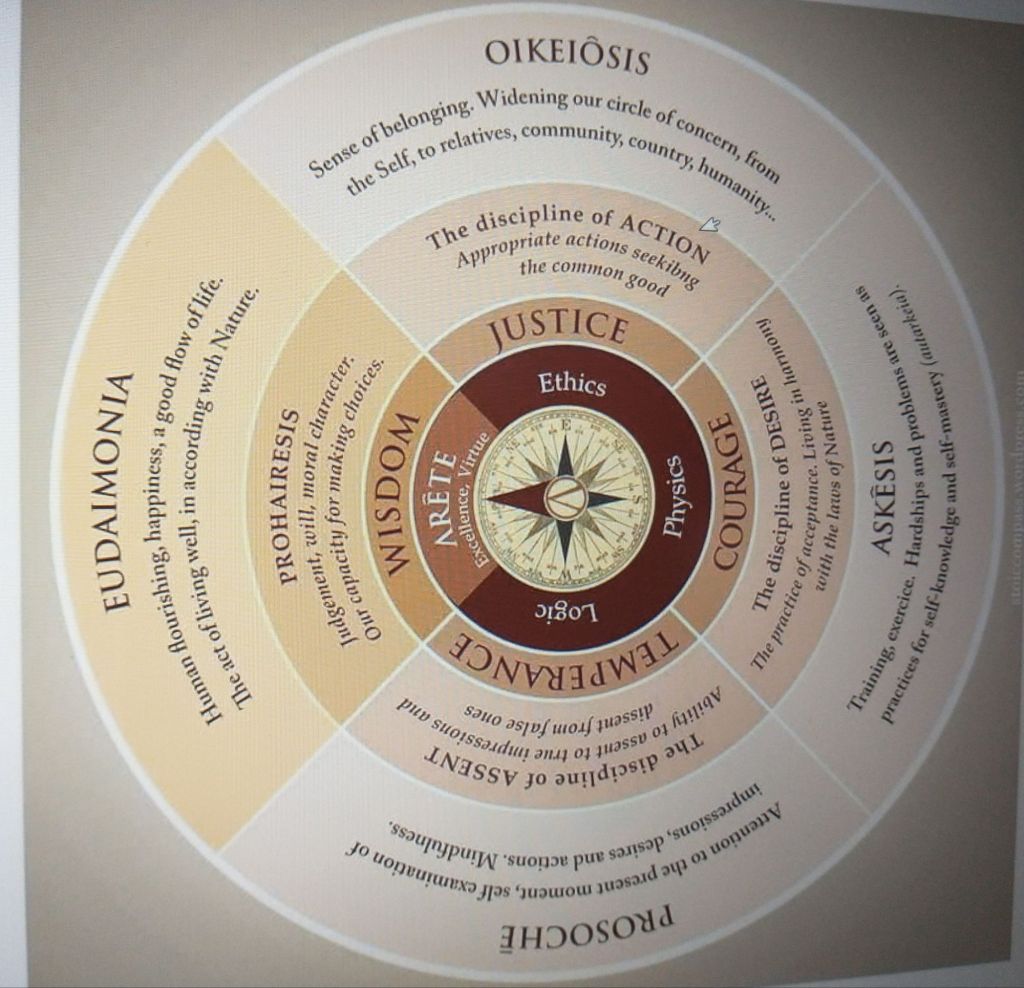
Justice corresponds with the discipline of action. Each of us has the power to choose to move towards a thing and to move away from a thing. No thing is in our power but that does not stop us from pursuing goals and trying to achieve.
Stoicism is powerfully rooted in the individual. Virtue is the only good and virtue is the exclusive domain of our own actions and opinions. All else we cultivate an indifference towards so that we remain free and have a happy flow of life.
When we act, we must act in accordance with nature. When we observe other living things we see that they take action to obtain food and shelter, procreation, and the rearing of children. Humans are no different but we meet our needs socially in cooperation with others. Acting in accordance with nature requires right living and consideration of others. Stoicism is rooted in cosmopolitanism.
Self awareness begins when we are toddlers but it is many years and much growth before we learn that other people are conscious as well. We call it the narcissist dilemma. My thoughts and feelings are real and important because I think them and feel them, and others’ thoughts and feelings are mere rumors.
As we mature we realize our parents have feelings and needs and are not just characters in our story but are the protagonists of their own narrative. The rest of the family, my neighbors, other townspeople, and personal associates are all the same. We bring this understanding to our state, country, and in its most developed state all the people of the world.
Beyond that we think of all the people of the future. We share the same resource base and the decisions we make impact their lives. I want to leave more of a legacy than resource depletion and micro plastics; waste, debt, and bullshit. I want to leave the children something good.
This is Justice. Weighing our own interests as co-equal with all others. We give primacy to the people in front of us for sure but we are all bound together in a collective web of reciprocity and shared habitat.
We have to take in information and make decisions with others in mind to live a life of justice. Right actions, done at the right time, for the right reasons is what it means to live a just life.
I did a talk on Facebook today if you want a deeper dive: https://www.facebook.com/share/v/1DvjEJ3Xgs/ It’s only going to be up for 30 days. If you like what I have to say but my book: https://breadandrosespress.com/products/the-practical-guide-to-building-a-better-world

Holiday Letter 2025
Here it is early 2026 already and I’m just getting to my holiday Letter. 2025 was long, significant, and hard. For all the things that were good and I’m proud of, it was a difficult year I was happy to put to bed.
The year began with the bustle of moving into our new home. Shae and I bought a 1910 turnkey house in Leavenworth, Kansas at the end of last year and because she is a wonder it was quickly unpacked and decorated. Our things merged nicely and we only had to purchase a handful of items to have a beautiful tricked out house.
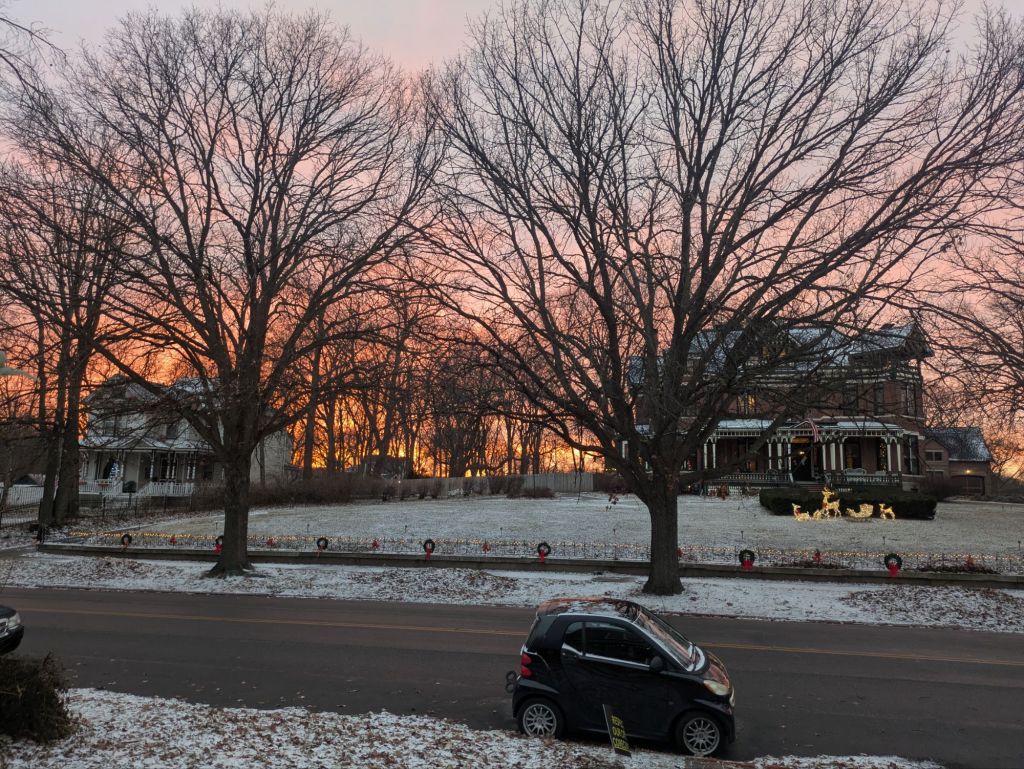
Shae, being a photographer has a great eye for light, composition, and color and I live in a house way cuter and put together than I have any right to. I have made good use of the kitchen to put out mostly healthy, scratch cooking, increasingly on a budget as the year progressed.
We have a formal dining room and got a nice dining room table to match my grandma’s china cabinet. We put it to good use with game nights and monthly gatherings of friends and associates. Shae has the Illuminati card game one of my particular favorites and we had several great games. Shae and I played a lot of chess and then Carcassone this year.
I continued my election organizing with the https://newamerican.community We posted over 100 learn articles based on needs identified in a comprehensive survey. We made contact with lots of County party organizations and provided fundraising and technical support to 20 different organizations. The County Party Orgs have a lot of potential but need a lot of consistent mentoring and follow up to make qualitative capacity improvements.
We also fought troubled private prison provider CoreCivic, who sought to reopen their troubled facility as an ICE detention facility. They applied for a permit in February and I wrote a blistering op ed to the LV Times calling for the permit to be rejected. A couple days later they withdrew from the permitting process and announced they were going to reopen.
I continued to write op eds and helped form a local opposition group and worked with regional allies to encourage the city of Leavenworth to defend their land rights. Leavenworth sued and won a temporary injunction. CoreCivic sued and lost. Appeals are pending with a hearing in February and CoreCivic applied for that permit with hearings scheduled in the spring.
Being part of a movement that is the only local community to stop an ICE detention facility has been satisfying. Here’s a link to one of my op eds if you want to learn more: https://www.kansascity.com/opinion/readers-opinion/guest-commentary/article303489741.html
Through all the organizing and activism I brought the Practical Guide to Building a Better World through the publishing process. I had a book release in Leavenworth and follow up events Columbia, Toledo, Farmington Michigan, and Bowling Green Ohio. You can get books directly from the publisher: https://breadandrosespress.com/products/the-practical-guide-to-building-a-better-world
I’ve had lots of media attention, more for the CoreCivic organizing then the book, unfortunately. The highlight was the NY Times coverage of The Pots and Pans March but my profile didn’t make the piece. I did get a nice profile in Voyage Minnesota.
https://voyageminnesota.com/interview/meet-mike-trapp-of-leavenworth-kansas/
The best book sales event I did was a training on working with homeless folks with the Missouri United Methodist Church homeless ministry team. It was a well attended powerful event and I got paid and sold a bunch of books. I have scheduled the training with the Daniel Boone Regional Library in Columbia for Saturday April 2nd. I hope to schedule more of those next year.
Last year we started Clear Creek Solutions LLC to manage the PAC. The consulting firm now pays the bills and the PAC is a volunteer effort. Our big contract is with Https: AnneforKansas.com Anne Peralker is an immigration attorney and moderate Kansas mom who is on fire to defend the constitution and the rule of law. She has a trust buster sensibility and when Kansas sends her as the first Democratic Senator since 1932 she will be the harbinger of the new FDR who will restore the federal system and address inequality and affordability.
In addition to the protest stuff I’ve been making the rounds doing some poetry and supporting the local arts. My gig work hasn’t paid as well this year and my savings are depleted so I’ve had to cut back. Shae has done well and is picking up the slack.
She took us and the boys to Chicago this summer and Seattle for Christmas. Aside from some trips to Columbia and a quick trip to OKC when Shae lost her brother and the book tour I’ve stuck close to home.
I stick with the gym and have had a year of physical training. I’m down to about 205, 15 pounds from my target weight and packed on muscle. I’ve corrected my posture and gait issues that were chewing up my knees. I’m almost bone on bone, but I hope to stay off knee replacements for another 3 years. I also resolved my fatty liver disease and have a clean bill of health.
I’ve read some great books. Four by my editor at Bread and Roses Adam Gnade, a book on military strategy I got a lot out of (I have to read Clausewitz), a book on Kansas petroglyphs, On Authoritarianism, Rules for Radicals (5th time or so) and other great books. My favorite was about Boss Tom Pendergast which was great in local history and practical politics.
Next year I am wrapping up at the gym and looking to improve my fitness with more activity and at the Leavenworth Community Center. I am going to do 4 weeks of Stoic spiritual exercises starting next Wednesday and inviting others to participate with me.
Look for at least a weekly post on developing virtuous habits and having a happy flow of life. I also plan to do more book promotion and continue to look for a career type job because of the insurance thing.
Thanks for sticking with me constant reader. I hope your next year is happy, healthy, and blessed.
Resistance Strategy
– Adapted from The Practical Guide to Building a Better World, Bread and Roses Press, Spring 2025
With the election of Donald Trump and Democrats shut out of policy making nationally we see a shift in organizing activities. Once again people are focusing on “resistance” types of activities. As we consider the principal goals of protest activity, one of the most significant but least likely to be achieved is policy change.
Protesters want to stop projects, change laws, end war, fund programs, and save the world. There are many reasons why policy change is elusive. Obviously, the deck is stacked for the interests of those who have concentrated power. Money, resources, and entrenched power structures favor and support the status quo. There are also important factors regarding how activists play the hands they are dealt. Focusing on those areas is more fruitful as things that are under our control comprise our entire arena of action.
One of the great strategic community organizers was Saul Alinsky. He wrote the dated but still relevant Rules for Radicals and promoted activist training via The Midwest Academy and other community organizations. Before he was a bugaboo of the right and I was a field organizer for the Student Environmental Action Coalition, one of the critical tools we used was the Midwest Academy’s Strategy Chart. The strategy chart is a simple tool primarily designed to address a common activist problem: jumping to tactics without identifying a strategy that can result in policy change.
It’s a common error to see a problem and jump to tactics without really exploring what you would need to do to have a better chance of a positive outcome. Strategy charts are usually created in a group setting. It’s important not just to have a good plan but to involve as many stakeholders as you can in the planning. People are much more invested in activities in which they have a voice.
The first step is to identify what you want to accomplish. One of the reasons we may not have seen policy change commensurate with the level of protest activity during the most recent racial justice protests could be the lack of clear policy objectives. Movement leadership was dispersed and localized and, even within individual communities, there was a lack of a consensus on what we were trying to accomplish.
As the Roman philosopher Seneca said, “If you don’t know to where you are sailing, no wind is favorable.”
You can make long-term, intermediate and short-term goals if you are working from an existing organization, or immediate goals might be self-evident if you are rallying around a particular issue or objective.
When you are movement building, organizational considerations need to be taken into account. What kind and how many resources do you have to mobilize? What activities can move forward your agenda and build your organization? How does your organization/movement need to grow to achieve your mission? What skills, reputation, and collaborative partners can our actions enhance?
Being thoughtful to ensure actions build up, rather than deplete, your group/community is smart organizing. The two ways to ensure your activism will continue into the future are building strong and lasting organizations and building robust and resilient communities of change.
You must be specific in a strategy chart. How much money do we want to raise? How many new participants or how many new leaders will there be? Lastly, you want to identify any internal issues that will need to be addressed to take on the issue you have identified.
The next step is identifying potential allies and stakeholders who you can activate to work with you. Who shares similar values? Who has worked on this issue in the past? Who is impacted by the issue you are trying to address? The more diverse the stakeholders you can identify, the bigger your potential change movement becomes.
After identifying what you want to accomplish, you determine who has the power to make that change. If you want to shut down a nuclear power plant that is an asset of an investor-owned utility, you might look at the Board of Directors or the Nuclear Regulatory Commission. On a smaller scale, if you wanted speed bumps on your busy road, your local Mayor and City Council or the City Manager might be able to give you what you want. It might take a little research or fact finding to get this step right.
Once you know who your target is, you identify what leverage you have over your target. In general, businesses and corporations respond to money and elected officials respond to votes. In our antinuclear power work, our movement sought to impact the Board of Directors through shareholder amendments and protest activity that drove up security costs and soured public perception of the company.
We did a “fold, mutilate, spindle” campaign when customers paid their bills. By taping pennies to their electric bill or stapling the check we forced hand processing of bill paying instead of the automatic bill processing that is the most cost effective. This tactic served to drive up costs, as boycotting a utility is nearly impossible for most of us.
We largely sought to impact the Nuclear Regulatory Commission through public comment via public engagement and feedback processes. The first demand of protest groups is to get a meeting with leadership to facilitate negotiations and lend credibility to your organization. However, even with our dynamic tactics and public support, we were unable to get over that hurdle.
On a much smaller scale—the quest for speed bumps for example—you may learn that speed bumps are decided on by the Public Works Department and approved by the City Manager. Having no direct influence over the City Manager or Public Works, your campaign might focus on your City Council Members or the Mayor, who hires and fires the City Manager. Such indirect targeting is common, as many decisions are made by appointed, rather than elected, officials. After you know your target, you can assess whether you want to address them directly or focus on someone who has power and influence over that person.
Now we are ready to go to tactics. Continuing with the speed bump example, if you did some research, you might find an already established process in place. In Columbia, Missouri this process involves collecting petition signatures to show neighborhood support. After that, the city measures traffic counts and driver speed, and with that info and crash statistics, it generates a score. Then, the top three or so projects get built each year.
If your project was lower on the list but had a good case to make, you could organize protests and rallies targeting City Council Members or Candidates, especially if there is an upcoming election. You could write letters to the editor, show up at Council meetings for public comment, make social media posts, and get signs made. There is an art to being the squeakiest wheel, which tends to get more than its fair share of the oil. Focused strategic squeaking is even more likely to be successful.
Another reason policy change can be elusive for activists is that they’re coming to the issue too late. Frequently, people who oppose an issue don’t learn about the issue until the major decision points have passed. Trying to bring about change at the 11th hour is much harder than getting in early and engaging in public input processes. Also, activists sometimes bite off issues in which a policy win would require more participants than they can mobilize.
With good strategy your resistance activities can be more than a feel-good experience of speaking truth to power. Instead you can engage in resistance activities with movement and organizational building in mind to build relationships and accumulate power and influence to make effective policy change a reality.
Rolling with Resistance
To be in opposition to authoritarianism is right and proper and good. Trump pardoning the January 6th insurrectionists raises the chance of street violence by both sending a message and releasing violent empowered organizers back to the street.
We are moving into dangerous times. I see the punching Nazi memes spread widely. I see the don’t just say you see Proud Boys but say how many, engaged in what tactics, armed how, and exactly where.
This preparation for street fighting seems reminiscent of the German socialists street fighting the fascist youth. It played into Hitler’s hands to see more power. Street violence plays into the hands of the authoritarians.
I would call for other tactics than street violence. In a counseling technique called motivational interviewing it talks about rolling with resistance. We don’t engage directly with the unhelpful bullshit but allow it to pass by.
Undermine the authority of the dominant paradigm through the simple act of telling the truth and not buying into the gaslighting. Humor and mockery and pointing out the absurdity of their actions. Being reasonable and unperturbed and not taking their bait is in order.
We need to remember our audience. Those folks who don’t follow the news, have little factual information and have real issues that were not addressed by the Bidenomics of rising prices, housing costs, and lack of opportunity.
Trump is at his highest approval underwater at a little less than 2% negative. If he can be brought down to 10% negative the Supreme Court and Senate may set some limits to this lame duck would be authoritarian.
Or we can engage him in rhetorical battles of his choosing where our complex truths are less compelling than his simple lies and we lose the middle. His hurting his voters by ending $35 insulin is lost in the culture wars and his executive orders trump the constitution because no one who can will hold him accountable.
The choice is ours. To be strategic and disciplined, true and right and shape what comes next for justice or be reactive and right and lose it all but the boot smashing in our face for all eternity. Or something entirely different, I don’t know, I just need to do my best to build something good.
The Secret of Overwhelm
There are a couple of secrets to dealing with feeling overwhelmed. Our fast paced modern life often feels like far more is expected of us than we can actually deliver. Overwhelm can result in frenetic activity that doesn’t bring results, like spinning your wheels, shutting down and not doing anything, or perhaps worse yet getting the “fuck it’s”, where we start doing behaviors we ordinarily would never do.
Learning to handle overwhelm with grace has been a skill I have been forced to develop. I remember when I was leading a multidisciplinary team working with hard to serve individuals in a behavioral health program and my Manager said: “You look like you feel overwhelmed”.
I said: “I don’t feel overwhelmed, I am overwhelmed.” The issue was not my emotional regulation it was the material factors of the job I was assigned to do.
My first tip is differentiate, is this a feeling or is it a situation that truly exists? If it’s a feeling we use our reliable feelings management skills of taking a moment to slow and deepen our breath. Note any tense areas, I carry my stress in my neck and shoulders, so stretching and relaxing those areas are a must for me.
Note your thinking. Question and challenge any thinking that is contributing to the feeling. Can we look at something differently to get a different result? In addition to challenging negative self talk launch some positive self talk to encourage and soothe yourself. If those helpful and comforting thoughts don’t immediately come to mind, think about what you would say to a friend.
If it’s an actual situation of being overwhelmed then prioritizing and strategically addressing the confounding issues is the key. I rank what I have to do and mostly tackle the most important things first. When you’re taking action you focus on that task with your whole attention and let the rest go until it’s their turn.
We can only do one, or sometimes two things at a time. Don’t try to tackle more than that. Make your list and work through it, most important things first. That’s it. Manage your feelings and strategically work your way back to control.
That one was for me today friends. Time to get back at the immediate concerns of the day. Thanks for reading.
January 6th
It’s January 6th which means I have to get political. I prefer to tell stories, document an interesting day, share a life hack or pro trip or brag about my travels. Not today.
Today is about organizing. The New American Community formed on July 4th, 2024 to revitalize rural America and other forgotten areas through fostering local activism. Our mission is to identify, train, and support an organ in every county in America.
Today we launched our County Party Organizing Project (CPOP). We have assembled a data base of County Party leadership and I have been calling State Party leadership to see about coordinating our efforts. I have had promising early conversations in Kansas and Missouri and had planned to move forward here to mark this day.
Mother Nature had other plans. Some ice and sleet and literally a foot of snow kept at me to shovel sidewalks, porches, and decks. I also had to shovel out the van. I’d already shoveled it out once to get it in a side street since we’re a snow emergency route. I parked it on a hill and ran it out of gas. I have to shovel out the alley now to get the Yaris out with a gas can.
While I was warming up though, I did some research in Texas, where there’s not a blizzard, and reached out by phone and email. I’ve got more leads to chase down tomorrow, if you pile up messages someone is going to call you back. Most people are going to want to do something if you make it meaningful and easy. So that’s what we’re doing.
We’ve also been emailing our contacts and following up with interested activists. It feels like we are at the beginning of great things. We are calling it localism. Empowering local organizers to address hyper local issues and rack up wins through community organizing, direct action, and mutual aid instead of just trying to win elections every 2 years.
We’re also asking questions and listening. We have a draft of a survey we’re shopping around to stakeholders. We’re completing our data bases and getting our nascent social media up and running. And shoveling snow.
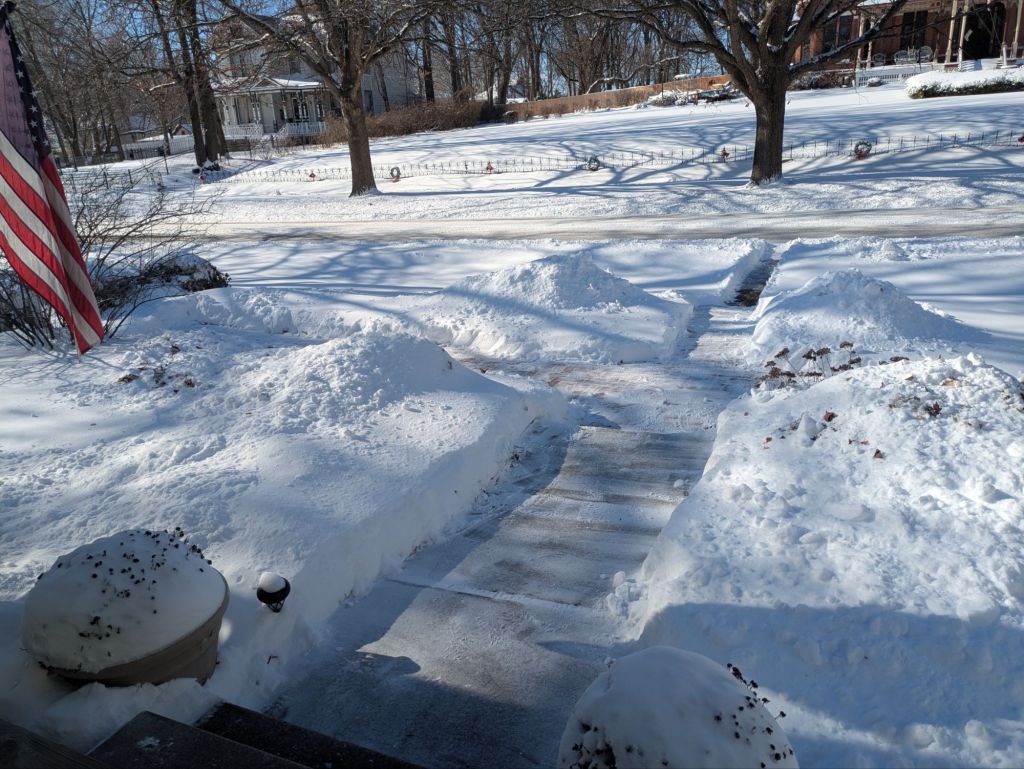
If you want to get involved sign up on our website: https://newamerican.community.
Blessed New Years
I was blessed to ring in the new year with my fiance in our new home. We closed Thanksgiving week but it’s her busy time at work and we traveled to Michigan/Ohio for the holidays so we didn’t get to move in in earnest until December 30th.

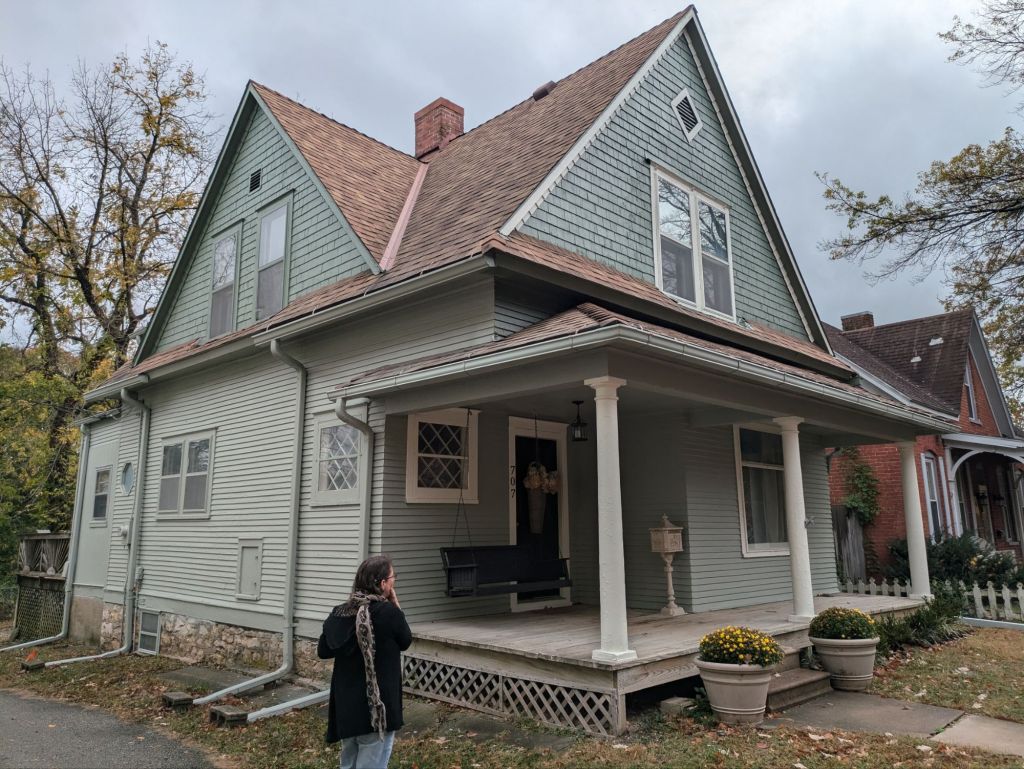
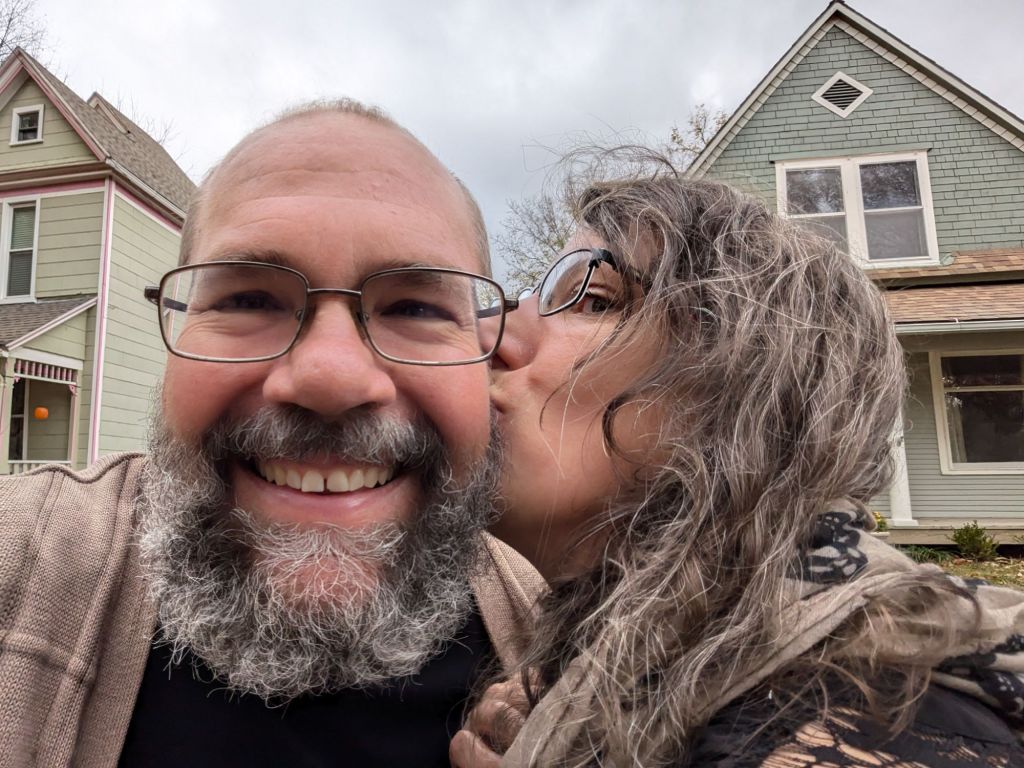
It was a lot of work with us and the two teenagers but we pulled together nicely and got it done in time to kick back a little and enjoy the new year coming in. It was nice to only have to get out of bed two minutes before the new year for my sparkling juice toast and sweet kiss and I was back in bed before 12:02 when I got a Happy New Year text.
Moving and setting up house in a new relationship brings a lot of changes. One of the things that brought my partner and I together was a commitment to sustainability as part of our values.
Shae was a single mom but still really on it as far as recycling. Her oldest is into cooking and has done a lot of research on nutrition and learning to make healthy food versus ultra processed stuff. Being able to support and build on all that has complemented my long interests in what I would call right living, using moral reasoning to choose the best course of life considering sustainability, justice, and neighborliness.
Writing The Practical Guide this year has sharpened my interests in areas I’ve lagged in like personal health. Having a chapter on lifestyle as an instrument of change means you have to eat and exercise to optimize for health and avoid medical intervention. So I’ve done that to good effect.
With helping my partner through a difficulty, house hunting and then moving, starting a political action committee and completing a manuscript and seeing it through publishing has been a lot. Through it I’ve recycled, minimized my food waste, made real food at home for the family, and all the other right living tasks I could reasonably pull off.
When I’ve had to I’ve grabbed the fast food, skipped the gym, or made some other compromise with my overall values to have a smooth flow of life. You don’t have to mail it every time to get a comparable impact but not stressing over that last 10% that would take effort beyond my abilities.
I elevated for a couple days to get the move done and worked harder than I should. I cut a few corners though to make it a bit easier. My brother John says “Most moral choices are between the right thing and the easy thing.”
I want to work hard for a better world and for my family but I also want to take the time for self care, companionship, kindness, and especially whimsy when it can be found.
What are you doing to be happier, healthier, or more sustainable in 2025? I’ll be blogging everyday through Bloguary. Look for an update on #freeKevinBromwell and as January 6th approaches I’ll be talking about the County Party Initiative for the New American Community. Stay warm constant reader.
Resolutions ABCs
Hello readers. As 2024 comes to a close it seems like a good time to talk about New Year’s Resolutions. I have been a student of the change process for nearly 40 years and when I decided to write the The Practical Guide to Building a Better World I started the outline on January 1. The timeframe worked out and I liked the symbolism.
I laid out my schedule for the year and got it to the publisher a month early. My success this past year was built in many failed resolutions in the past. The resolution articles I have seen this year have been based on SMART goal planning, mostly recommending being realistic and measurable.
This sound advice is easily found and self explanatory so I am taking a different tack. Most folks fail at resolutions because behavior change is hard. We are driven by historical inertia, habit, and static social structures that ensure that today looks a lot like yesterday and tomorrow won’t be much different.
As a student of the change process I recommend developing a plan that involves, small steps, data tracking, and rewards for progress. I also believe the most meaningful change is through developing moral character. Most moral choices are between the easy thing and the right thing.
Being a good person is a great life aspiration but an inadequate goal because it lacks specificity. It would be better to work on what a good person would do or say. I was called out for taking a sharp time with a young person when I was just frustrated in general.
As I look to address this an old school behaviorism technique immediately came to mind – ABC Sheets. Antecedent, Behavior, and Consequence tracking are a great way to generate data to fuel a behavior change agenda.
First, just tracking negative behavior reduces its occurrence. Knowing you are going to be accountable brings instant improvement.
Antecedents are the factors that come before the target behavior. Knowing the circumstances can help point to patterns and consequently levers where work can be applied to make change.
For me some reflections identified the fact that we were moving houses, we had just returned from holiday travel, and there was a lot of work to be done to be ready. This underlying situational stress definitely played a role as did some personal dynamics that I’m not going into in this format.
More concretely I was also shouting from another room which means I started out yelling. I also realized I was nursing some resentment. The fact I was also bustling around, thinking about tasks, and drinking coffee which are possible factors that could be significant if I tracked the behavior over time.
Reflecting on the specifics of the behavior I would like at my sharp tone and unkind words out of proportion for what I was yelling about. More details can help understand the behavior and ways to shape it into more helpful and friendly communication.
The Consequence is what comes after. Understanding negative consequences can help us remember not to do certain things. We can also identify hidden rewards from the behavior. If I take a sharp tone and people do what I yell about I get rewarded. It’s hard to stop negative behaviors we use to get what we want.
In this case the consequence was I got checked, I apologized and noted my behavior. I tried, not with total success, to be mindful of my tone through the stressful move. I also was able to give a little advance warning of where I was at emotionally, which some found helpful.
Understanding the costs of our behavior or how it is rewarded by getting our needs met can be helpful to identify ways to change those reward systems to better live out our values and be the best version of ourselves.
The biggest issue with behavior change is folks think they can make a big choice and lots of things will be different. Really our life is made up of many many choices we make everyday. Real change is making more and more of those choices that improve our lives and those we share a life with.
 Multiconstruct
Recent Comments