Archive
Stoic Spiritual Exercises: Cultivating Justice
I am beginning my second week of stoic spiritual exercises. My last blog post was about cultivating Wisdom: https://multiconstruct.blog/2026/01/07/cultivating-wisdom/
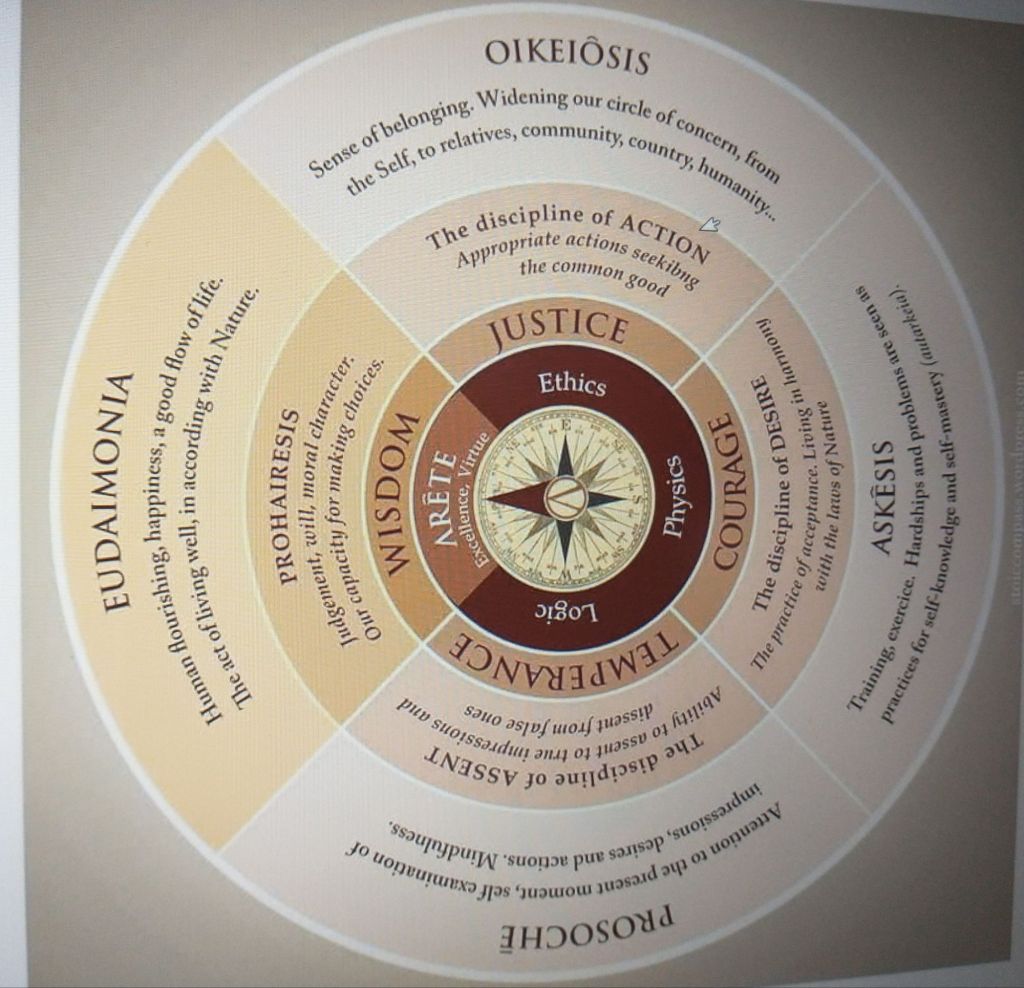
Justice corresponds with the discipline of action. Each of us has the power to choose to move towards a thing and to move away from a thing. No thing is in our power but that does not stop us from pursuing goals and trying to achieve.
Stoicism is powerfully rooted in the individual. Virtue is the only good and virtue is the exclusive domain of our own actions and opinions. All else we cultivate an indifference towards so that we remain free and have a happy flow of life.
When we act, we must act in accordance with nature. When we observe other living things we see that they take action to obtain food and shelter, procreation, and the rearing of children. Humans are no different but we meet our needs socially in cooperation with others. Acting in accordance with nature requires right living and consideration of others. Stoicism is rooted in cosmopolitanism.
Self awareness begins when we are toddlers but it is many years and much growth before we learn that other people are conscious as well. We call it the narcissist dilemma. My thoughts and feelings are real and important because I think them and feel them, and others’ thoughts and feelings are mere rumors.
As we mature we realize our parents have feelings and needs and are not just characters in our story but are the protagonists of their own narrative. The rest of the family, my neighbors, other townspeople, and personal associates are all the same. We bring this understanding to our state, country, and in its most developed state all the people of the world.
Beyond that we think of all the people of the future. We share the same resource base and the decisions we make impact their lives. I want to leave more of a legacy than resource depletion and micro plastics; waste, debt, and bullshit. I want to leave the children something good.
This is Justice. Weighing our own interests as co-equal with all others. We give primacy to the people in front of us for sure but we are all bound together in a collective web of reciprocity and shared habitat.
We have to take in information and make decisions with others in mind to live a life of justice. Right actions, done at the right time, for the right reasons is what it means to live a just life.
I did a talk on Facebook today if you want a deeper dive: https://www.facebook.com/share/v/1DvjEJ3Xgs/ It’s only going to be up for 30 days. If you like what I have to say but my book: https://breadandrosespress.com/products/the-practical-guide-to-building-a-better-world

Cultivating Wisdom
Today I kicked off 4 weeks of stoic spiritual exercises. I have framed the exercises around the four virtues: Wisdom, Justice, Courage, & Temperance. This week I want to talk about wisdom.
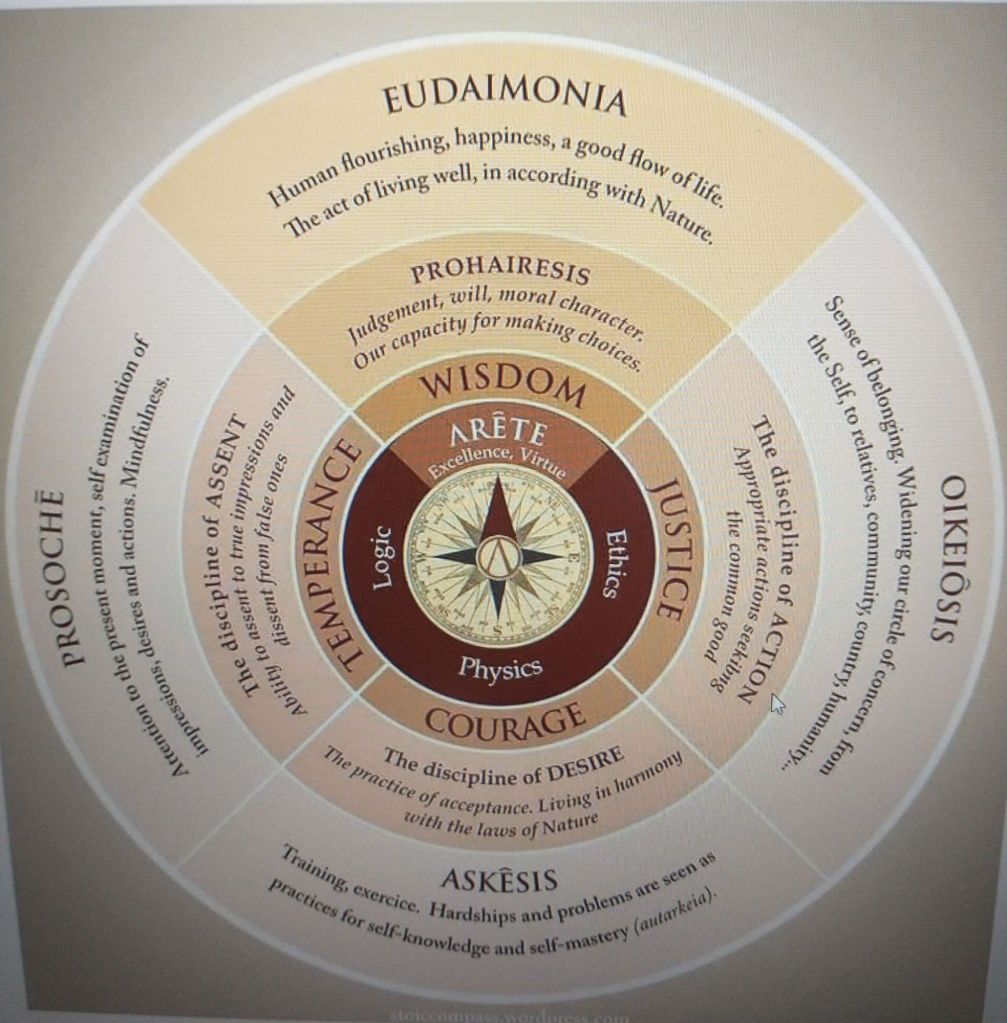
Philosophers get their name by being lovers of wisdom. Wisdom is not only knowledge but practical knowledge. Knowledge that informs our actions that allow us to be happier and more effective people. To exercise judgement and build our moral character.
Eudaimonia is a happy flow of life. It is living with purpose without being disturbed. Arius a disciple of Epictetus distilled his teachings into a small book called The Enchiridion.
The Enchiridion opens with: “Of things some are in our power and others are not…” Then he makes the definitive list of what those things are: Opinion, Movement towards a thing, Desire & Aversion or in a word, whatever are our own acts. Note, that no thing is in our power but the ability to strive towards a thing are well within our control.
Not in our power are the body, reputation, offices (magisterial power) and wealth, or in a word, whatever are not our own acts. Magisterial power has to do with holding an office or facing legal issues like going to jail or prison.
He goes on to talk about the nature of these categories. The things in our control are by nature free, not subject to restraint or hindrance. No one can force you to change your opinion or your goals, what you like and what you don’t like. These things alone are inviolate.
The things not in our control are weak, slavish, in the powers of others. Right living then becomes an act of categorization. Is this in my control or not. The wise person toggles between bravery and acceptance depending on the nature of the situation.
Epictetus then tells us what happens when we confuse what we own with what is in the hands of others: We will be disturbed, we will lament, we will blame both gods and men. The worst thing that can happen to someone is to be excuse ridden. If you don’t take responsibility for your life you can’t change it.
He also gives the promise that if your only concern is your own actions and you realize this is your only concern: you will blame no one, you will accuse no one, no one can compel you, and no one will harm you because you cannot be harmed.
You can take my car, slander my reputation, and jail my body. When I realize none of that is my true concern or an impediment to my will then none of that is really harmful.
So this week set a goal of self improvement. Take a look at the Enchiridion or Marcus Aurelius’s meditations. Put down the social media and open a book. Take 5 minutes for relaxation or meditation. Commit a helpful point to memory. Fall in love with wisdom all over again.

You can also follow my daily morning and evening meditations https://facebook.com/events/s/morning-meditation/1596039878200918/
https://facebook.com/events/s/evening-meditation/1433127815047245/
 Multiconstruct
Recent Comments